Get Full Government Meeting Transcripts, Videos, & Alerts Forever!
Get email alerts on the Public Safety Technology topic
No spam. Unsubscribe anytime.
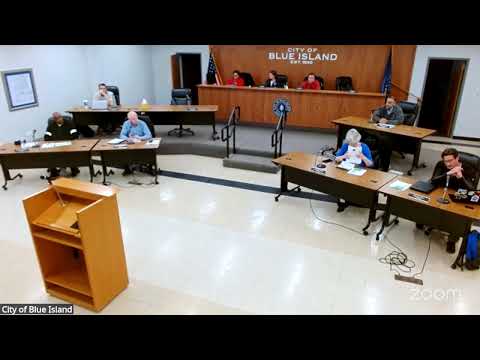
Council hears pitch for non-toxic security "foggers," asks police and fire to review
Summary
A vendor demonstrated water-based security foggers to deter break-ins; council members raised life-safety and false-alarm concerns and directed the vendor to meet with police and fire for a live demonstration before any code changes.
A private security vendor demonstrated a camera-linked, water-based security "fogger" at the Blue Island City Council meeting and said the system can be remotely deployed to deter burglars while clearing within minutes. The vendor said the fog is non-toxic and "breathable" and that video verification is used to limit false deployments.
Council members pushed back on safety and code issues. The mayor and a fire-department representative (discussed during the presentation) flagged the possibility of false burglar alarms triggering full fire-department responses and raised concerns about impaired egress under Section 101 of the life-safety code. An alderman asked whether the system would be allowed under current city code; staff said no specific code presently allows this use and that a code amendment would be required.
Excel Entertainment's Billy Papis, a terminal operator representing affected businesses in Blue Island, told the council his company logged about 40 break-ins in a three-month period, causing roughly $2.5 million in damage to machines the company is responsible for. He described a three-phase approach his company favors — better detection with cameras and AI, physical hardening (gates and doors) and then fog-based deterrence — and said vendors can provide live demos.
Vendors named in the discussion included Destiny Park and Rhino Target as competitors; the presenting company identified itself as operating as Alarm Illinois and Guard Watch. The vendor said many deployments remain in beta, that systems include battery and cellular backup, and that video verification and operator controls are used to reduce accidental activations. The vendor recommended a short local beta (a live pilot account) so police and fire could evaluate operations and safety.
Council took no immediate regulatory action. Members agreed to arrange meetings between the vendor and local police and fire chiefs, and to schedule a live demonstration; staff said any subsequent code changes to permit deployment would require drafting specific language and returning to council.
What happens next: the council requested a coordinated meeting with police and fire and a live demo; any ordinance or building-code amendment would come as a future agenda item after those reviews.