Get Full Government Meeting Transcripts, Videos, & Alerts Forever!
Get email alerts on the Land Use topic
No spam. Unsubscribe anytime.
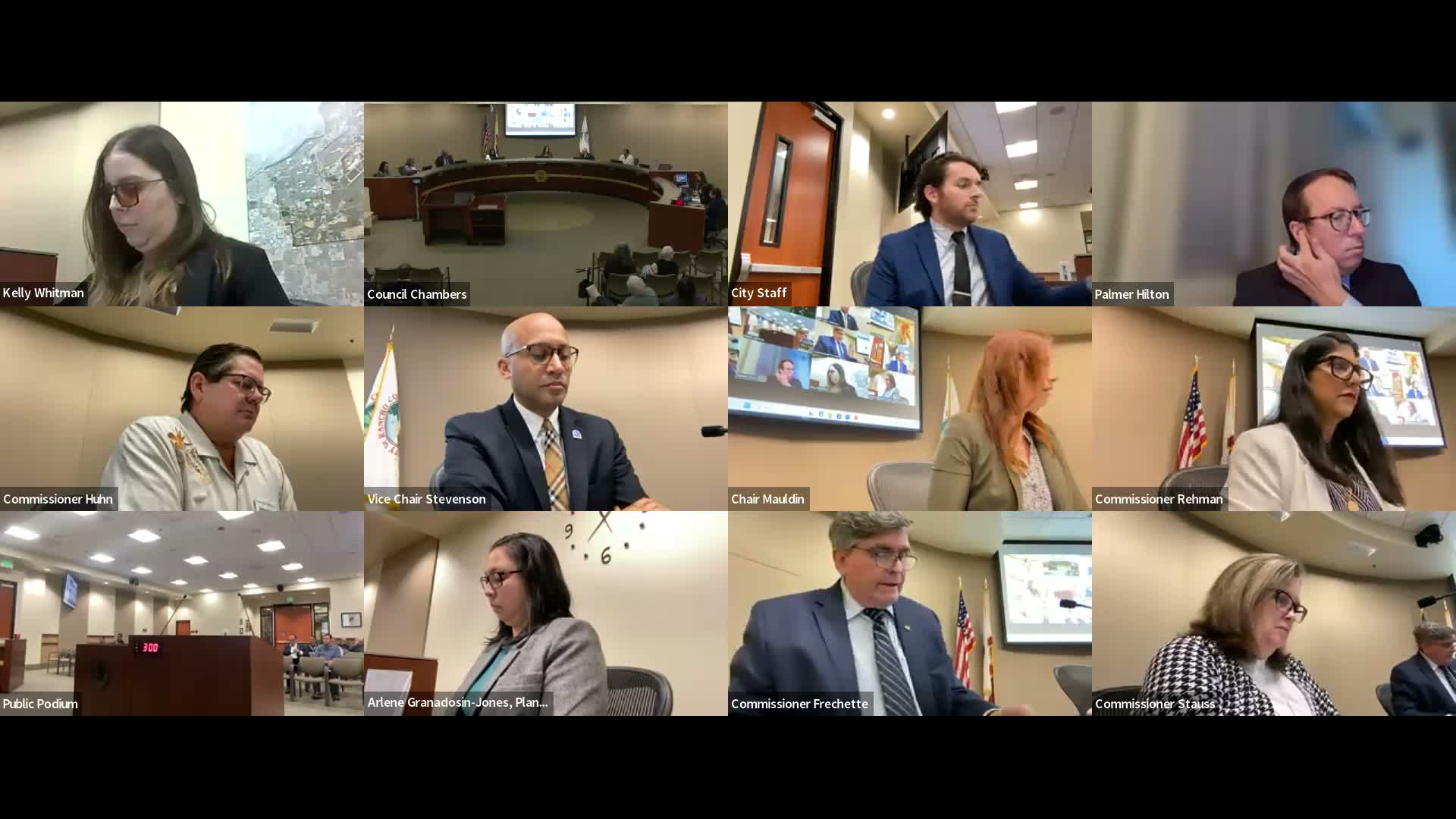
Planning commission deadlocks on Stone Creek Quick Quack permit after neighbors cite traffic and noise concerns
Summary
Rancho Cordova planning commissioners split 3–3 on approving a Conditional Use Permit and minor design review for a proposed Quick Quack car wash at Stone Creek Village. Neighbors raised traffic, queuing and noise concerns; staff and the applicant said studies show impacts can be mitigated. The commission continued the item for staff to prepare denial findings and re‑notice the hearing.
Rancho Cordova — The Planning Commission deadlocked on a proposal for a Quick Quack car wash at 3384 Zinfandel Drive after residents urged commissioners to reject the application over traffic, noise and neighborhood‑compatibility concerns.
A motion to adopt a resolution approving the conditional use permit and minor design review for the Stone Creek Quick Quack (project PLN‑0525‑0129) resulted in a 3–3 tie, which the city attorney treated as a denial. Commissioners then voted unanimously to continue the item so staff can return with formal findings of denial at a future noticed meeting scheduled for March 25.
The proposal calls for a 3,300‑square‑foot car‑wash building with a 108‑foot wash tunnel, two vehicle queue lanes, two vacuum canopies with 16 vacuum stations, three employee parking spaces and associated screening and landscaping on a 1.3‑acre pad within the Stone Creek Village shopping center. City planner Chance Finley Ross said the project is proposed to operate from 7 a.m. to 9 p.m. and, with conditions, qualifies for a CEQA infill exemption (Section 15332).
“In our review we evaluated circulation, queuing, noise, air quality and utilities,” Ross told the commission, saying staff required traffic and queuing analyses and an acoustical study and recommended conditions addressing stacking limits, noise attenuation, lighting and screening.
Neighbors who spoke during public comment said the site is already congested during peak times and that adding a car wash would worsen pedestrian‑vehicle conflicts in the center. “The addition of another Quick Quack location in this vicinity will only exacerbate an already strained situation,” said Valerie Nipschild, who asked the commission to deny the project. Vera Ferguson, who said she lives just off Broke, said the car wash would hurt residents’ ability to enjoy outdoor spaces and could reduce neighborhood property values.
Steven Davis, a neighbor who lives off Bear Hollow, cited noise complaints tied to dryers and vacuums at other Quick Quack sites and said enforcement is inconsistent: “You can’t sit outside” at a nearby restaurant because of noise, he said.
The applicant and consultants said they had revised the design to reduce circulation conflicts and mitigate noise. Price Walker, representing the owner of the Stone Creek Village parcels, said the corner was originally conceptualized as an auto‑oriented use and that the proposed building orientation, materials and landscaping were intended to make the project compatible with the shopping center.
Don Shively, a company representative, disputed an assertion that Quick Quack had been sold and said the operator remains in the hands of the founders. He said consultants produced traffic, acoustical and landscaping reports for staff review and that the company designs operations to limit off‑site impacts.
Nick Wecker, civil engineer and architect of record for the applicant, said the traffic and queuing analysis estimated a maximum on‑site queue of five vehicles as measured from the pay station, while the queuing lanes were designed to accommodate up to 12 vehicles. He said the traffic study estimated a net increase of 540 daily trip ends (25 during the PM peak hour) and that an acoustical study showed a worst‑case receptor level of about 50–52 decibels with all equipment operating.
Several commissioners expressed concern that the site’s existing pedestrian activity and the shopping‑center circulation pattern could make spillover and safety issues likely despite on‑site queuing design. One commissioner who questioned the project at length said the staff finding that the project would not be “detrimental to the peace, morals, comfort or well‑being of persons residing in the neighborhood” is subjective and asked the commission to weigh demonstrable community impacts when making legal findings.
After the approval motion tied 3–3, the city attorney advised commissioners to make a separate motion directing staff to prepare specific findings of denial for the record. Commissioners moved to continue the item so staff can craft those denial findings and re‑notice the public hearing; the continuance motion passed 6–0.
Next steps: staff will prepare draft denial findings and re‑notice the item for the commission’s consideration on March 25. The meeting record indicates staff will retain the traffic and acoustical analyses and that operational complaint monitoring is a recommended condition should the commission ultimately approve a permit in a future action.
Meeting adjournment: The commission adjourned at 7 p.m. and staff reminded the public about a general‑plan update workshop the following evening.