Get Full Government Meeting Transcripts, Videos, & Alerts Forever!
Get email alerts on the Abandoned Vehicles topic
No spam. Unsubscribe anytime.
DPW readies $2 million EPA-backed program and RFP to tackle thousands of abandoned vehicles
Summary
DPW director told a legislative oversight hearing that an MOU with EPA secured roughly $2,000,000 to start a contracted abandoned-vehicle removal program, targeting about 4,000 vehicles a year and seeking a roughly 10-acre staging site for processing and export.
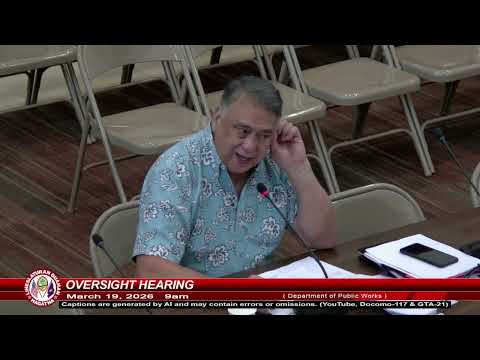
Director Vince Areola of the Department of Public Works told the Committee on Land, Environment, Housing, Agriculture, Parks, and Infrastructure on March 19 that DPW has finalized an MOU with the Guam Environmental Protection Agency that provides about $2,000,000 to begin an abandoned-vehicle collection and recycling program.
Areola said DPW is preparing a procurement package (an RFP/IDIQ) to contract private recyclers and tow providers; market research identified firms that can either remove whole vehicles for off-island shipment or dismantle and process parts for export. "We have a, a procurement process that's ready to be released. It's on my desk as we speak," Areola said.
Why it matters: the department estimated a large backlog of end-of-life and abandoned vehicles on island (Areola said "well over 13,000" in his earlier estimate) and said the program aims to remove roughly 4,000 cars a year to reduce safety, sanitation and environmental risks. DPW currently stores about 300 vehicles in its compound and lacks a permanent staging site for large-scale operations.
Program details and costs: Areola described two contractor models: firms that take vehicles whole for off-island disposal and firms that dismantle cars, recover materials and ship crushed cubes. He said containers can hold around 60 to 70 such cubes. DPW's market research gave a removal/recycling cost estimate of roughly $400'$600 per vehicle, numbers Areola discussed in response to committee questions. The transcript records a DPW estimate that the EPA MOU amounts to about $2,000,000 and that further appropriations could be requested after initial program results.
Staging, environmental and accountability issues: DPW told senators it wants a government staging site of about 10 acres, ideally near the port, but finding suitable government land has proven difficult because of aquifer, river and shoreline protections and the preponderance of land under Chamorro Land Trust oversight. Areola said the department will seek a fenced, lit and secure lot with processing offices and environmental compliance measures, but that private recyclers also maintain staging areas that could be used once contracts are in place.
Staffing and contracting approach: Areola said DPW prefers to contract the bulk of removal and recycling work so highway-maintenance crews can focus on core mission tasks (road maintenance, pothole repair). He described how contracted vendors would provide pickup, debris-removal and fluid-draining services and return VIN-level inventories for accountability: "we give them a goal, x amount of cars to pick up on a certain day ... and then we get listings back from them," he said.
Committee follow-up: Vice Chair Senator Duenas and other members pressed DPW on the abandoned-vehicle fund collected from registration fees and on how the EPA funds will be used. Duenas said she will convene revenue-and-tax officials at an upcoming session. Areola said the procurement was expected to be released in the coming weeks and that DPW will report results and seek additional funds if the program demonstrates effectiveness.
Next steps: DPW plans to release procurement documents, onboard contractors to begin staged collections and return program performance data to the legislature during the regular budget cycle. The committee retained authority to review the proposal in the upcoming budget hearings and asked DPW to include clear KPIs and cost breakdowns in its budget presentation.