Get Full Government Meeting Transcripts, Videos, & Alerts Forever!
Get email alerts on the Data Center Moratorium topic
No spam. Unsubscribe anytime.
Northampton County adopts 32‑month moratorium on data centers after public hearing
Summary
Following a public hearing with residents and advocates, the county adopted a temporary moratorium on data centers and similar high‑impact facilities for 32 months and directed staff and the planning board to draft zoning regulations and hold public workshops. Supporters cited water, noise and infrastructure concerns.
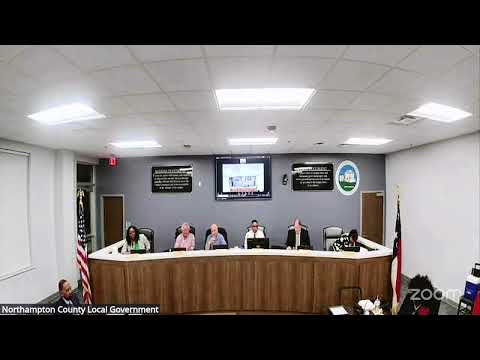
After a public hearing on May 4, 2026, the Northampton County Board of Commissioners adopted a temporary moratorium on development approvals for data centers, cryptocurrency mining and related high‑impact data processing facilities for a 32‑month period.
Casey Moravec, an attorney with the Southern Environmental Law Center, urged the board to adopt a pause to allow the county time “to study the impacts of data centers and to implement protections to mitigate their negative impacts without the added pressure of fielding project proposals at the same time.” Moravec recommended requiring data centers to obtain a special‑use permit, limiting construction to heavy industrial districts and adopting robust rules on water and power reporting, noise, air emissions and generator use.
Several residents and speakers urged a longer pause than the planning board’s proposed one‑year draft. Belinda Joyner told commissioners she had collected more than 300 signatures and said, “I just want you to know... I’ve already read” the proposal and questioned whether public input would matter. Alfred Koscheepe argued the current draft ordinances undercut protections, warned that draft distance rules could permit clusters and said draft community benefits committees lacked citizen representation and technical funding for experts; he urged the board to direct staff to return with stronger, enforceable standards.
Following discussion about supervision, committee membership and transparency, a commissioner moved to adopt a 32‑month moratorium; the motion was seconded and carried by voice vote. The board directed the planning board and county staff to study impacts (energy, water, noise, land‑use), draft ordinance amendments and hold public workshops to gather input during the moratorium.
County staff stated the moratorium draws on language used in recently adopted moratoria in other North Carolina counties and cited statutory authority in chapter 160D of the North Carolina statutes. The ordinance excludes development approvals that were already valid before the ordinance’s effective date and excludes single‑ and two‑family residential dwellings.
The board’s action was procedural and regulatory; individual proposals would still require public hearings and any future rezoning or permit rules will be subject to additional local notice and hearings.