Get Full Government Meeting Transcripts, Videos, & Alerts Forever!
Get email alerts on the Reentry Program topic
No spam. Unsubscribe anytime.
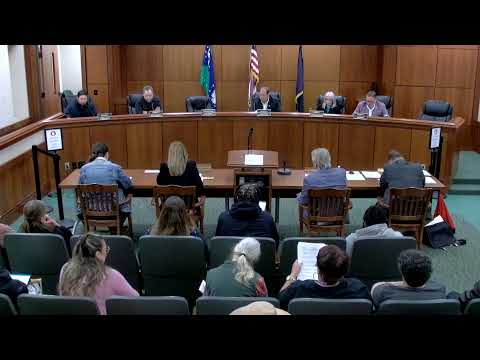
Residents and reentry workers urge Erie County Council to reverse decision moving ECR SSA under probation
Summary
Multiple residents, program staff and outside experts told Erie County Council that moving the Erie County Reentry Support and Services Alliance (ECR SSA) into the county probation department risks undermining a voluntary, evidence‑driven program and urged the council to reconsider and preserve its independence.
Several residents, program staff and outside experts urged Erie County Council to reconsider a recent decision to place the Erie County Reentry Support and Services Alliance (ECR SSA) under the county probation department, arguing the change could convert a voluntary, successful reentry program into a compliance-driven arm of supervision.
“ECR SSA boasts a 93 percent success rate for services provided,” said Cindy Treiber, who addressed the council during the public-comment period and cited program funding and employer partnerships. Treiber said the program has generated “an operating fund of $300,325 a year” and estimated the program’s operating need at about $350,000 annually.
Multiple speakers warned the move risks blurring the line between voluntary reentry services and community corrections. “Reentry is supportive. Reentry is also voluntary,” said Stephan Durant, a subject-matter expert with SAMHSA GAINS Center, who described reentry as Intercept 4 in the sequential intercept model and parole/probation as Intercept 5. “Putting it under parole blurs those lines,” Durant said, adding that involuntary referrals would reduce ECR SSA’s ability to engage people with lived experience.
Allen Brown, a senior case manager at the reentry program who said he served 47 years in prison, told councilmembers that decisions to change the program’s structure “plunge[] the children who would have had a father coming home” into uncertainty. “You take people’s hope away,” he said.
Speakers raised confidentiality and access concerns. A county resident, identified as Alice, asked whether the program’s client-advocate preference for formerly incarcerated staff would survive absorption into the probation office, and whether HIPAA-protected information could be exposed if the program were administered by supervision staff.
Council members acknowledged the concerns. One member noted the council had moved to preserve the program in the short term but said structural questions remained and pledged further review of the issue and of how services would be delivered under county oversight.
The public requested that the council rescind or revisit the ordinance that transfers ECR SSA to probation, and several speakers urged at least a pause to allow a fuller review of program data, funding options and the likely effects on recidivism and client uptake. Council did not adopt new action during the meeting on ECR SSA; members said follow-up would continue.