Get Full Government Meeting Transcripts, Videos, & Alerts Forever!
Get email alerts on the Housing Policy topic
No spam. Unsubscribe anytime.
Cal Poly Humboldt students map faith‑based sites and pitch SB 4 road map to Eureka council
Summary
A team of Cal Poly Humboldt seniors presented a feasibility study using Senate Bill 4 to convert or reuse underutilized faith‑based land for affordable workforce housing, identifying 24 religious landowners and recommending outreach, church collaboration and technical assistance.
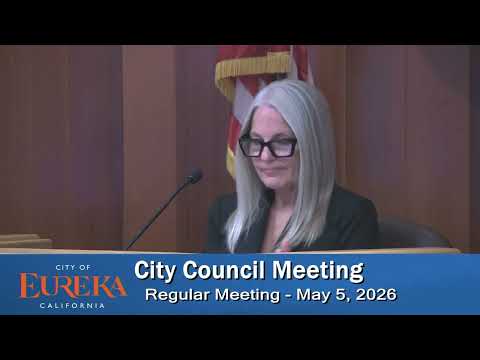
A Cal Poly Humboldt senior capstone group presented to the Eureka City Council on May 5 a feasibility study exploring how the Affordable Housing on Faith and Higher Education Lands Act (SB 4) could fast‑track affordable housing on faith‑based properties in Eureka.
Kate Pringle, speaking for the student team, said the project aimed to evaluate SB 4’s potential, identify barriers and generate GIS‑based site recommendations. The students told the council that Eureka must plan for 1,740 net new housing units by 2035 to meet state housing element requirements.
The students summarized SB 4’s three principal features: permitting eligibility for qualifying parcels even if local zoning does not currently allow housing; statutory pathways to bypass some discretionary reviews and environmental reviews; and an ownership cutoff requiring the property to have been owned by the qualifying religious institution on or before Jan. 1, 2024. “SB 4 has great potential to fast track affordable housing projects in Eureka,” one student said during the presentation.
Their GIS work identified 24 religious organizations owning about 26 acres within the city; roughly 18.4 acres were classified as underutilized by the students’ criteria. The team described several site case studies (including a 21‑unit project elsewhere that used SB 4) and noted constraints such as parcels partially covered by trees or bordering creeks that could trigger environmental review that SB 4 does not streamline.
The students recommended several city actions: expand outreach to faith‑based institutions (many interviewees were unfamiliar with SB 4), encourage collaboration among congregations to pool land or parking, connect churches with potential developer partners and community intermediaries (for example, the Humboldt Interfaith Fellowship), host city‑run informational events about SB 4, and reconsider the use of the term “affordable housing” in favor of “workforce housing” to reduce stigma.
Council members probed technical details. Council member Moulton asked what “resource” meant in the students’ map legend; students said the California Tax Credit Allocation Committee scoring favors sites close to social services, transit and health care. Council member Fernandez asked about property tax exemptions for churches if land is repurposed; student presenters said a portion converted to nonreligious use may lose the religious exemption and that leasing income could offset increased taxes.
Kristin Kenyon, who supervised the class project, recommended the council review the students’ written report, which was linked in the agenda packet, and suggested staff follow up with the churches that expressed interest.
What’s next: students suggested the city host outreach and technical‑assistance events focused on SB 4 and to consider partnerships that would make projects financially feasible.