Get Full Government Meeting Transcripts, Videos, & Alerts Forever!
Get email alerts on the Local Option Levy topic
No spam. Unsubscribe anytime.
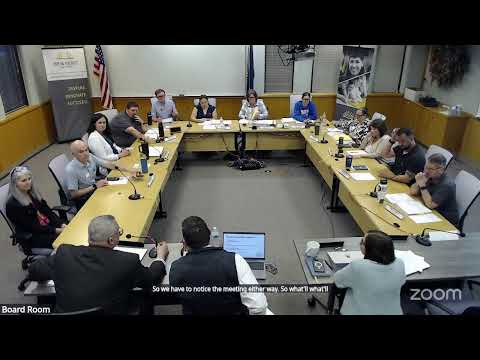
District details five‑year local option levy plan and projected uses if Measure 36 2 39 passes
Summary
Staff outlined a five‑year local option levy projecting roughly $32 million in receipts, earmarking about $4.8 million a year for licensed salaries and benefits and creating a stability fund to smooth the transition when levy revenues end; public commenter Derek Duff urged passage to end prolonged political turmoil and give time for structural reforms.
District finance staff presented the strategic plan for the proposed five‑year local option levy (referred to in public comment as Measure 36 2 39) and described how those dollars would be used to restore positions and stabilize the budget if voters approve the measure May 19.
Presenter Nate Wolf (finance staff) told the committee that the projection shows "a little over $32,000,000" in levy receipts over five years and that the district is identifying approximately $4,800,000 in licensed salaries and benefits to be supported by the levy. The plan anticipates restoring 17.5 classroom teacher FTE, reinstating music and PE, adding instructional coaches, expanding special‑education assistance, eliminating furlough days and beginning to rebuild an ending fund balance, while seeding a stability fund with $100,000 to cushion the period after levy revenues end.
The district emphasized a conservative approach: staff described the local option as one‑time or time‑limited revenue that should be used for stabilization rather than expanding permanent programs. "The key for us in utilizing this levy is not to spend it; it's basically one‑time money," a committee presenter said, urging the district to move FTE back to the general fund as recurring state revenue increases.
Public commenter Derek Duff spoke before the staff presentation and urged community support. "Because I wanna see a thriving environment for all of them and for every child in the district, I'm here to voice my support of measure, 36 2 39, and I'll be voting yes on the measure," Duff said, adding the levy would "pause the deep, structural pain" the district has faced and provide time for methodical change.
Staff walked the committee through the levy mechanics: a conservative 3% annual growth assumption in receipts, carryforward of unappropriated amounts (about $1.3M in the plan), and a year‑by‑year illustration that shows the levy reaching depletion around year 6 with the stability fund helping cover offsets in early years after levy expiration.
Committee questions focused on timing (collection begins with the October tax cycle after county levies are filed), how the district would move FTE back to the general fund if state revenues improved, and safeguards to avoid expanding permanent recurring costs into the levy. Staff reiterated that numbers are illustrative and will be adjusted as real receipts and state school fund changes are known.