Get Full Government Meeting Transcripts, Videos, & Alerts Forever!
Get email alerts on the California Energy Commission Confirmation topic
No spam. Unsubscribe anytime.
Energy commissioner Siva Gunda defends supply planning and grid transition as senators press on refinery rules and consumer prices
Summary
Siva Gunda, vice chair of the California Energy Commission, told the Senate Committee on Rules that the grid is now over 65% zero‑carbon and that planning assumes Diablo Canyon will retire by 2030; senators and consumer advocates pressed him for deadlines on resupply and minimum inventory rules after recent refinery outages and price spikes.
Siva Gunda, vice chair of the California Energy Commission, told the Senate Committee on Rules that California has made substantial progress on decarbonizing the grid and strengthening reliability but faced tough, near‑term challenges on fuel supply and gasoline prices that require continuing regulatory and market work.
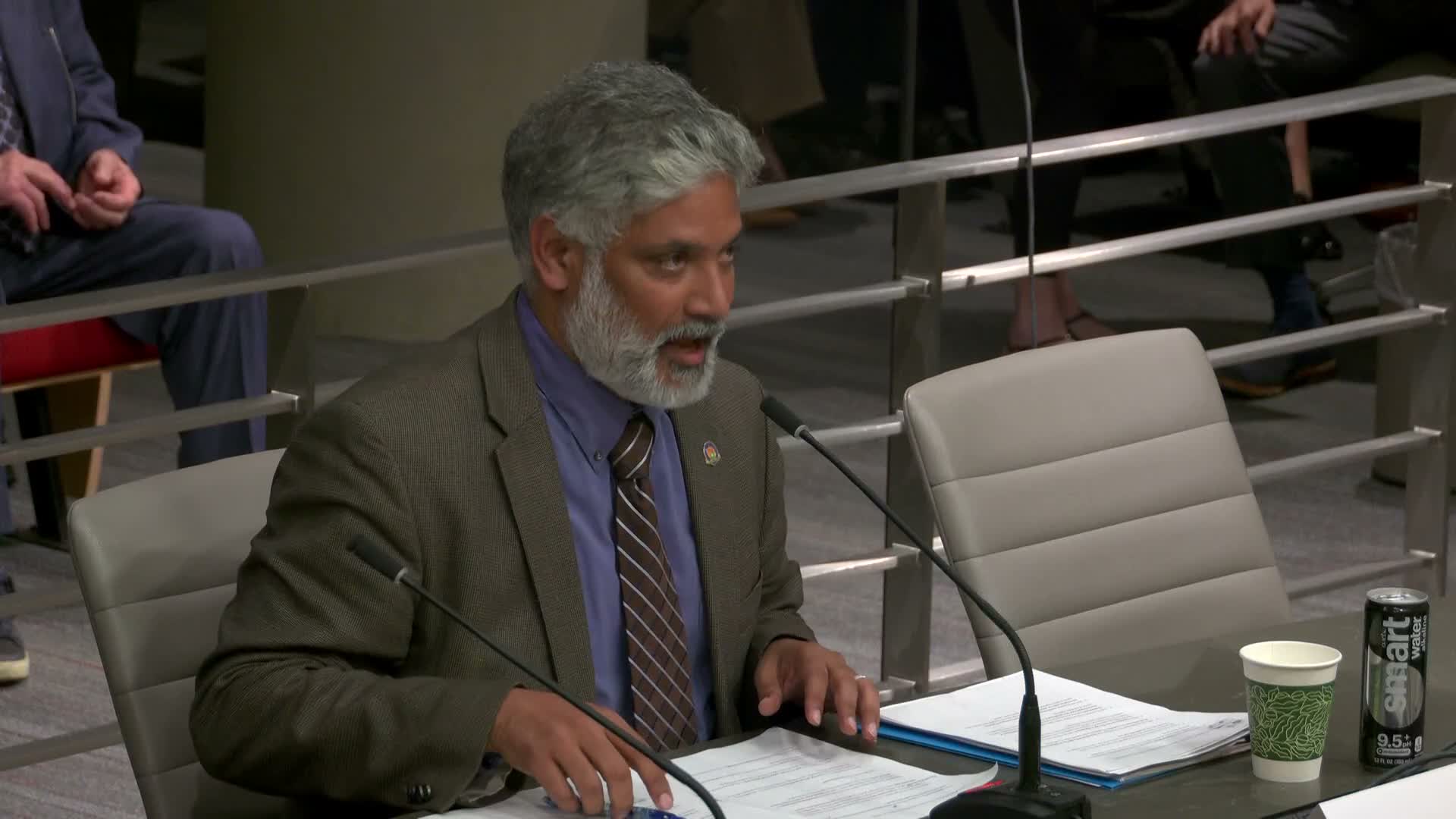
Gunda, appearing for confirmation, said the state’s grid is now “over 65 percent zero carbon” and described three simultaneous transitions — decarbonizing generation, electrifying buildings and transportation, and winding down petroleum — that he said require coordinated planning, transparent analysis and trade‑off management. He said the commission has added roughly 30,000 megawatts of new resources since 2020 and has another 28,000–30,000 megawatts in the pipeline.
Why this matters: Members pressed Gunda on refinery closures, imports, the California Transportation Fuels Plan and resupply rules for outages. Senator Chobot asked what the Energy Commission is doing for small refineries; Gunda said the commission advocated for exemptions in special‑session work and coordinates with CARB on compliance for broader refinery obligations.
On petroleum markets, Gunda highlighted new oversight tools. He described the Department for Petroleum Market Oversight (DPMO) and a regulation that now requires refineries to submit resupply plans for planned outages; he said imports of refined product increased in March and April following early disruptions. Consumer advocates pushed for binding minimum inventory and resupply rules with deadlines, arguing recent refinery outages contributed to margin spikes.
Gunda also addressed long‑range grid planning and Diablo Canyon: he said agencies plan as if Diablo will retire in 2030 and that adding storage and other resources — he cited about 17,000 megawatts of storage additions — and stronger Western market coordination can prevent reliability shortfalls if procurement continues as forecasted. He said data‑center load forecasting has been baked into planning (the commission has counted 5–7 gigawatts as a realistic, near‑term contribution to forecasts) and that the Pathways initiative and regional market work aim to improve reliability and lower costs.
Public comment included broad support from labor, environmental groups and utilities praising Gunda’s convening work on Pathways, and opposition from the Consumer Watchdog, which urged faster rulemaking on resupply and minimum inventories and pressed for deadlines before confirmation.
Action: The committee voted 4–0 to advance Gunda’s nomination to the full Senate for confirmation.
Next steps: The nomination proceeds to the full California State Senate; senators and advocates said they expect the commission and DPMO to provide further deadlines and concrete rulemaking milestones on resupply and inventory tools.