Get Full Government Meeting Transcripts, Videos, & Alerts Forever!
Get email alerts on the State Water Board Confirmation topic
No spam. Unsubscribe anytime.
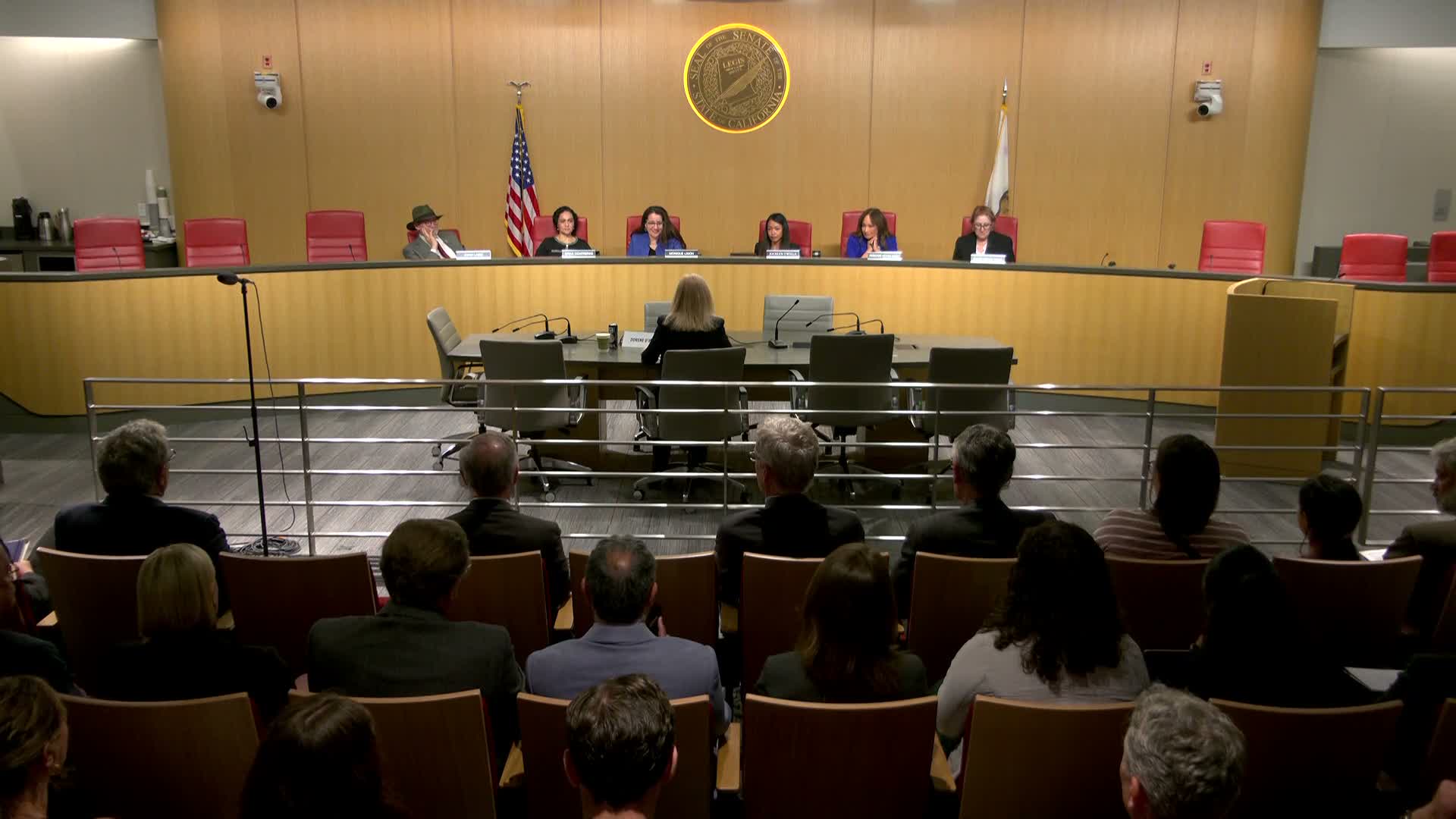
State Water Board nominee Diadamo defends progress on safe drinking water as senators press for targets and equity
Summary
Doreen Dion Diadamo, nominated to the State Water Resources Control Board, told the Senate Committee on Rules that the SAFER fund and consolidation authority have helped cut Californians without safe drinking water from 1.6 million to about 800,000 since 2019; senators urged concrete annual targets, faster fixes for failing systems and more inclusive outreach on the Bay‑Delta plan.
Doreen Dion Diadamo, the governor’s nominee to the State Water Resources Control Board, told the Senate Committee on Rules that state programs launched since 2019 have narrowed the number of Californians without access to safe drinking water from about 1.6 million to roughly 800,000, but lawmakers pressed her for clearer multi‑year targets and faster action for the hardest cases.
Diadamo, appearing for her confirmation hearing, described priorities that include local water‑use efficiency standards, implementing the Sustainable Groundwater Management Act in critically overdrafted basins, increased groundwater recharge permits, recycled water and updates to the Bay‑Delta plan. “Since the passage of the Safe and Affordable Fund in 2019, the number of Californians without access to safe drinking water has dropped from 1,600,000 to 800,000,” Diadamo said in her opening remarks.
Why this matters: Lawmakers said the state still faces hundreds of systems that fail or are at risk of failing and want measurable, time‑bound goals. “If you have 390 that you’ve already said are failing systems… in one year that should be down to 300,” said Senator Reyes, pressing for annual reduction targets. Diadamo responded that staff maintain an annual needs assessment and that prioritization focuses first on failing systems, but she declined to provide on‑the‑spot multi‑year numeric targets and offered to follow up with staff for details.
Committee questioning covered the State Auditor’s 2022 review and program changes. Diadamo said the board built an advisory committee, expanded technical assistance to local communities and uses an annual needs assessment to target projects. She told senators that mandatory consolidation authority has been used strategically: “Before we received authorities from this body for mandatory consolidation, we had on average about four consolidations a year. Since 2019, we’ve had 180 consolidations. We have 200 consolidations that are in progress.”
Lawmakers pressed on the hardest remaining problems: small, rural systems with insufficient rate bases and domestic wells that fall laterally behind larger agricultural or municipal systems. Diadamo said the board does not have direct jurisdiction over domestic wells but coordinates mitigation through SGMA and other regional programs and that domestic‑well mitigation programs are required components of groundwater sustainability plans the board reviews.
The hearing also touched on the Bay‑Delta plan and letters of opposition from environmental and tribal groups. Diadamo acknowledged the concerns and said the board has broadened outreach and tribal consultation in the plan’s development; she described a proposed alternative pathway called “Healthy Rivers and Landscapes” as a backstop that combines flow approaches with ecosystem restoration while still balancing other beneficial uses.
Public comment included dozens of water agencies, regional associations and technical assistance providers who praised Diadamo’s consensus‑building and practical experience. Environmental groups including the Delta Tribal Environmental Coalition and Friends of the River opposed the renomination, arguing the board has too often sided with agricultural and urban water interests and urging more aggressive ecosystem protections in the Delta.
Action: After testimony and public comment, the committee voted 4–0 to advance Diadamo’s nomination to the full Senate for confirmation.
Next steps: The nomination will be considered by the full California State Senate; Diadamo and the board have committed to follow up with senators on detailed staff numbers and proposed annual goals for reducing the number of residents without safe drinking water.