Get Full Government Meeting Transcripts, Videos, & Alerts Forever!
Get email alerts on the Foster Care Icwa Mmip topic
No spam. Unsubscribe anytime.
Advocates tell Assembly foster‑care system is a pipeline to the MMIP crisis; call for ICWA enforcement and tribal funding
Summary
Advocates and legal experts told the Assembly Select Committee that Native children are overrepresented in foster care and that children and parents who enter the child-welfare system are more likely to become MMIP cases; they urged systemic funding for tribal response capacity, better ICWA implementation, and stronger cross‑agency accountability and training.
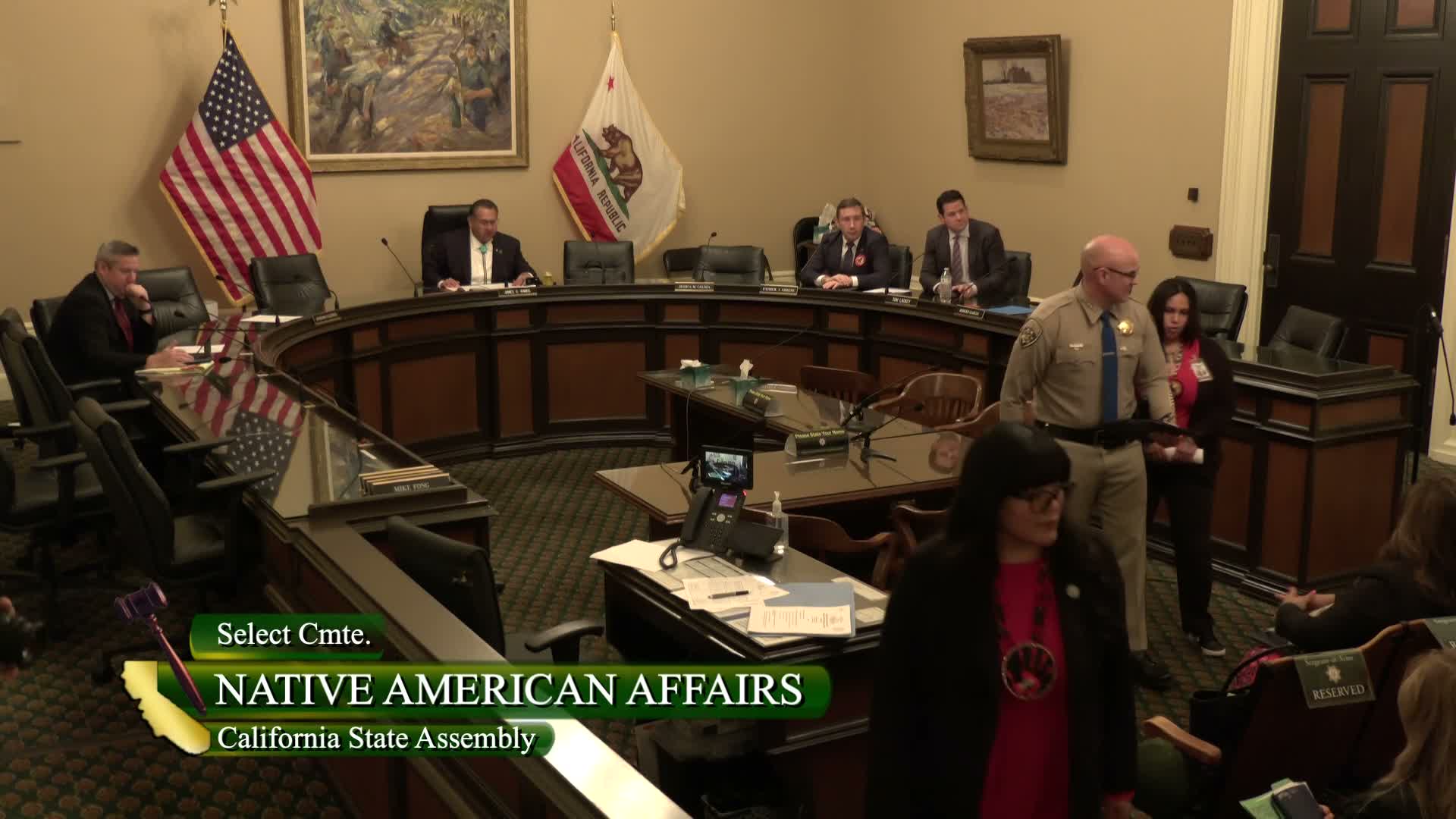
A third panel at the Assembly's MMIP hearing tied the missing-and-murdered crisis to overrepresentation of Native youth in the foster-care system and urged systemic fixes—stable funding to tribes, better ICWA implementation and more rigorous accountability for social‑work and law‑enforcement practice.
“Native children in California are placed in foster care at approximately 4 times the rate of other children,” a Morning Star representative told the committee, adding that nearly half of Native children experience some child-welfare involvement by age 18. Kimberly Clough, legal director at the California Tribal Families Coalition, said data vary by source but cited local figures showing Native children as a disproportionate share of foster placements (one county example: 2–3% population vs. 36% of children in foster care).
Panelists described recurring failures: social workers unfamiliar with feather-alert criteria or tribal notification procedures, high turnover among county staff that erases training gains, and cases of suspected trafficking originating from custodial or holding facilities that were not investigated. Advocates asked for immediate changes: non-competitive, sustained funding for tribal MMIP coordinators and response units; mandated data improvements that capture tribal affiliation (not only race/ethnicity); and stronger enforcement mechanisms when ICWA or other responsibilities are not implemented.
“Trust tribes,” Kimberly Clough said. “Tribes know their community. Why not say, we trust the tribe to know how to build their judicial system... and invest in it?”
Members acknowledged the complexity—panelists repeatedly framed the overrepresentation as rooted in colonization, poverty and intergenerational trauma—and signaled interest in longer-term fixes that emphasize prevention, tribal capacity and early intervention across schools, social services and law enforcement.
The committee closed the panel and moved to public comment, with next steps focused on improving data accuracy, accountability for training outcomes, and funding design that privileges tribal decision making.