Get Full Government Meeting Transcripts, Videos, & Alerts Forever!
Get email alerts on the Feather Alerts And Implementation topic
No spam. Unsubscribe anytime.
CHP reports higher feather‑alert activation rates; DOJ details tribal police pilot and data work
Summary
California Highway Patrol told lawmakers it has increased Feather Alert activations and designated tribal liaisons; the Department of Justice said it is finalizing AB 3,099 implementation and a tribal police pilot with the Yurok Tribe and is working to improve crime reporting and ICWA coordination.
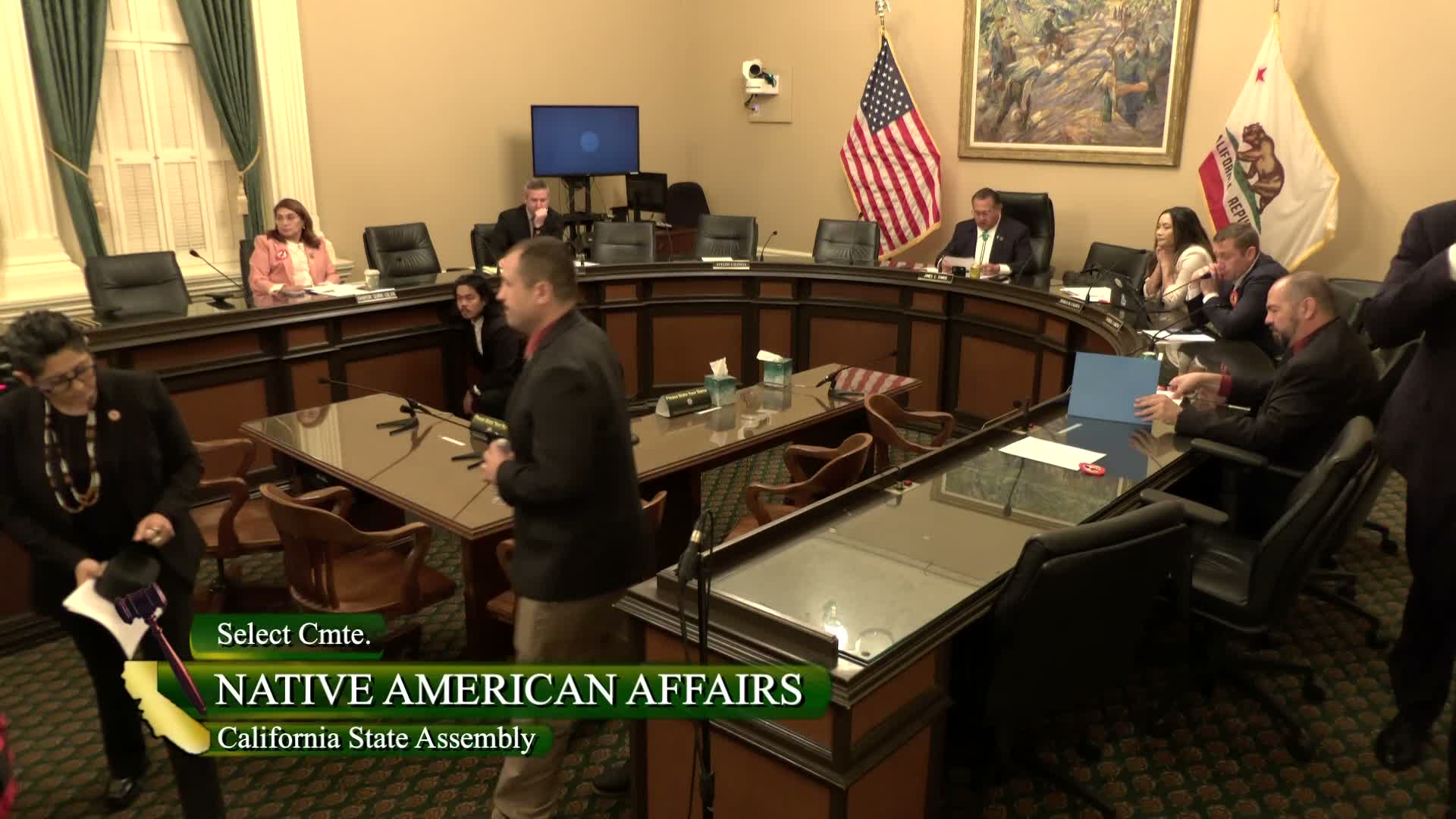
The California Highway Patrol and the state Department of Justice reported measurable operational changes at a May 5 Assembly hearing that lawmakers and tribal leaders said have improved MMIP responses but still require ongoing training and oversight.
CHP Commissioner Sean Duray told the committee that after criticism in an earlier hearing the agency instructed officers to err on the side of issuing Feather Alerts when criteria are ambiguous. "If a local agency is requesting to activate an alert and the officer didn't feel like the criteria was met... let's on the side of caution, and let's issue that alert," the commissioner said, and cited last-year activation statistics (45 of 47 requests filled) and full activation for the 15 requests so far in 2026.
Duray also described a departmental tribal‑liaison network, the appointment of Sergeant Carrie Mendoza as a dedicated tribal liaison, expanded statewide outreach and a commitment to eight hours of human‑trafficking training for all CHP personnel by the end of 2026. He invited tribal leaders to visit the CHP emergency-notification center to see how alerts are processed.
Janet Beal of the California Department of Justice's Office of Native American Affairs said the department is finalizing the AB 3,099 report and has stood up a Public Law 280 Advisory Council to address inconsistent application of concurrent jurisdiction that can delay investigations. Beal described efforts to improve crime reporting and data and said the DOJ selected the Yurok Tribe as the participating site for a tribal‑police pilot program slated to begin 07/01/2026 to strengthen public safety and reporting systems.
Committee members sought clarity on alert turnaround times (often “within hours”), criteria used to activate alerts, and how POST and other training will reinforce retention of PL 280 concepts. CHP said that officer transfers are governed by seniority but commanders and leadership positions offer some latitude to place officers with relevant experience in commands that touch tribal communities.
The committee said it will seek continued coordination between CHP, DOJ and tribal partners to ensure alerts, training and data systems produce measurable improvements in response times and investigative outcomes.