Get Full Government Meeting Transcripts, Videos, & Alerts Forever!
Get email alerts on the Cap And Invest topic
No spam. Unsubscribe anytime.
Senators grill CARB over April ‘Cap and Invest’ amendments as critics warn $4 billion MDI could cut GGRF funding
Summary
A joint Senate hearing questioned CARB’s April amendments to California’s Cap and Invest regulations—highlighting a $4 billion Manufacturing Decarbonization Incentive (MDI), reallocation of allowances to utilities and industry, and potential reductions to the Greenhouse Gas Reduction Fund (GGRF). Legislators sought assurances on emissions integrity, enforcement and fiscal estimates; public commenters urged removing or tightening MDI.
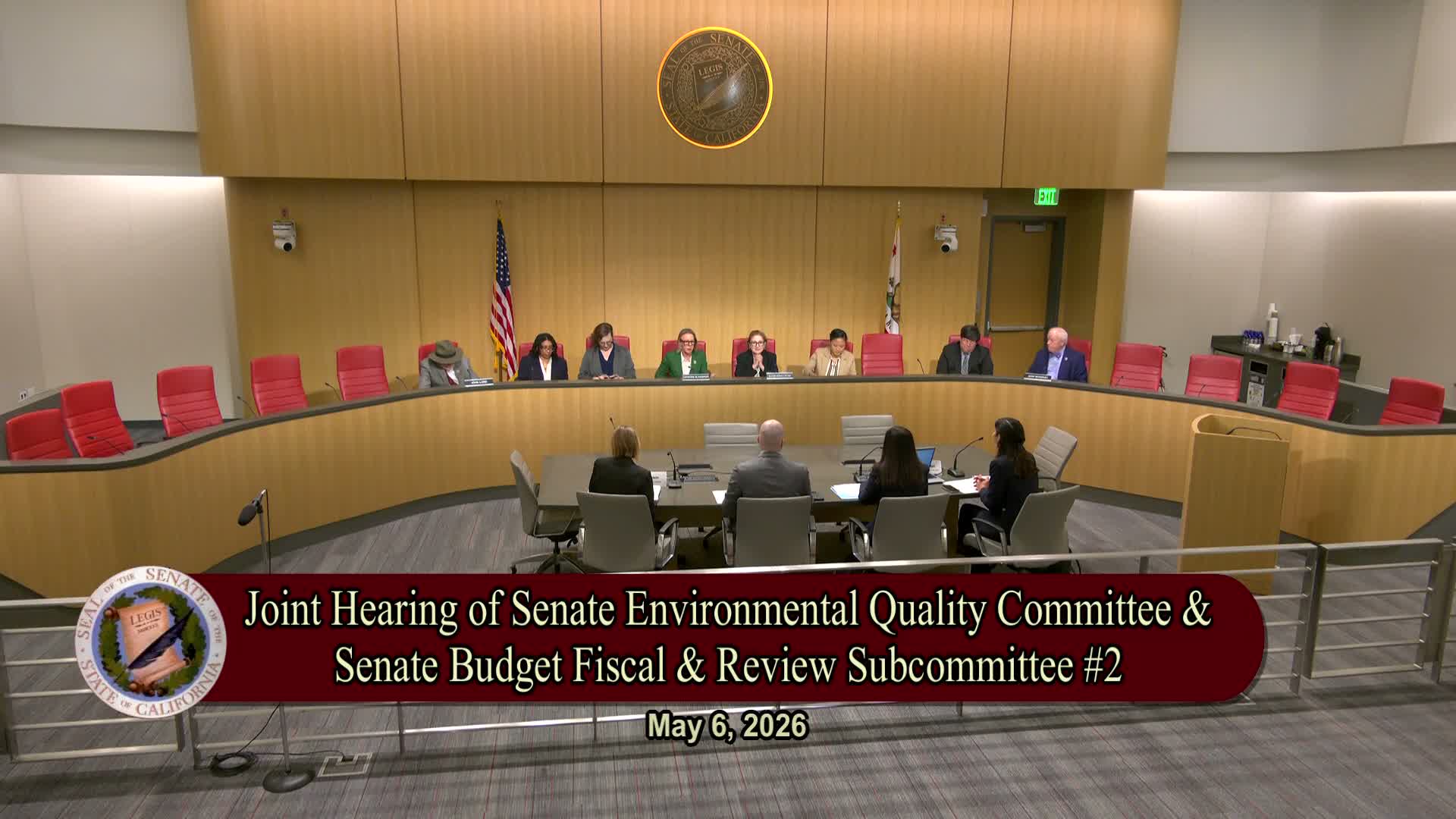
A joint hearing of the Senate Environmental Quality Committee and the Senate Budget and Fiscal Review Subcommittee No. 2 on May panel considered Air Resources Board (CARB) staff’s April amendments to the Cap and Invest regulations, focusing on an expanded Manufacturing Decarbonization Incentive (MDI), changes to allowance allocations and the potential impact on the Greenhouse Gas Reduction Fund.
CARB Chair Lauren Sanchez told senators the April changes respond to stakeholder feedback and legislative direction. Staff propose increasing the California Climate Credit from $8 billion to $10 billion through 2030 by redirecting more free allowances to electric utilities, expanding industry compliance support by roughly $800 million, and enlarging the MDI to $4 billion while preserving the program’s annual declining caps, she said. “These adjustments together accomplish several important outcomes,” Sanchez said, adding the board will consider the package on May 28 and that, if adopted, the amendments would take effect Sept. 1.
Why it matters: Senators and the Legislative Analyst’s Office warned the allocation changes could substantially reduce auction revenues that flow to the GGRF, a primary funding source for programs the legislature prioritized—including affordable housing, transit, safe drinking water and wildfire prevention. Helen Kerstein of the Legislative Analyst’s Office said the April amendments ‘‘are quite significant’’ and noted the MDI would add allowances ‘‘on top of’’ the cap, increasing uncertainty that the state will meet its 2030 targets. The LAO estimated CARB’s scenario could generate about $8 billion for GGRF through the end of the decade assuming a $30‑per‑allowance price, but warned revenue forecasts are uncertain.
Legislators’ line of questioning centered on three issues: (1) whether the amendments reflect legislative intent and preserve prioritized GGRF investments; (2) whether the MDI, as structured, could allow emissions above the cap while providing subsidies to industry; and (3) how CARB will ensure MDI payouts translate to additional, verifiable emissions reductions rather than investments companies would have made anyway.
Senator Gomez Reyes said the legislature needs clarity on ‘‘how the proposed amendments impact consumer costs and what enforcement mechanisms there are to provide accountability to these polluting industries.’’ Senator Laird, speaking as budget chair, warned a large net reduction in GGRF could force renegotiation of budget priorities negotiated last year.
CARB defended the package as an attempt to balance affordability, leakage prevention and emissions reductions. Chair Sanchez and deputy executive officer Rajendra Sahota described MDI guardrails that staff say will limit uptake and require a rigorous, public application and reporting process. Sahota told senators the first‑round bounding exercise suggests at most about 25,000,000 allowances could enter the market in an initial application wave, and that recipients must report on projected and realized greenhouse‑gas reductions; if reductions do not materialize, CARB can require return of the allowance value.
LAO and members remained skeptical about the degree of uncertainty. Kerstein said adding allowances to fund MDI ‘‘allows for additional emissions above that cap level’’ and reduces the state’s certainty of meeting its 2030 targets. Department of Finance staff warned GGRF projections are volatile and noted official estimates are updated only at published budget points, while saying they will work with the legislature on additional analyses.
Public comment reflected the split. Transit agencies, housing advocates, conservation groups and environmental justice organizations urged the legislature to intervene and remove or narrow MDI, warning the proposals would ‘‘cut GGRF in half’’ and jeopardize tier‑3 programs that deliver long‑term emissions and affordability benefits. Several industry groups, technology developers and some environmental‑technology advocates supported MDI as a needed tool to enable deep industrial decarbonization and prevent leakage.
What was not decided: The hearing did not produce a formal vote or binding change to the rulemaking. CARB’s staff said it will review public comments submitted through the extended comment period (closed May 4) and consider additional adjustments before the board hearing May 28. Department of Finance said it will continue to update revenue projections at standard budget intervals.
Next steps: CARB’s board is scheduled to consider the amendments on May 28; if adopted they would take effect Sept. 1, which CARB said is necessary for the PUC to implement related climate‑credit changes and to begin MDI implementation if approved. Senators asked for updated GGRF calculations and additional evidence of MDI additionality, reporting and enforcement before legislative budget votes.
The hearing underscored sharp tradeoffs legislators must weigh between near‑term affordability measures, industry competitiveness and long‑term investments the legislature tied to auction revenues.