Get Full Government Meeting Transcripts, Videos, & Alerts Forever!
Get email alerts on the Sackett Positions topic
No spam. Unsubscribe anytime.
State Water Board asks for staff and funds to plug permitting gaps after Sackett ruling
Summary
The State Water Resources Control Board requested 12 permanent positions and $2.6 million ongoing to handle permitting and enforcement work the Board says federal agencies no longer cover after the 2023 Sackett decision; the LAO endorsed a high bar but recommended statutory changes to improve state enforcement tools.
The State Water Resources Control Board told a Senate subcommittee it needs more staff to fill permitting and enforcement responsibilities left by a narrowing of federal jurisdiction in the 2023 Sackett decision.
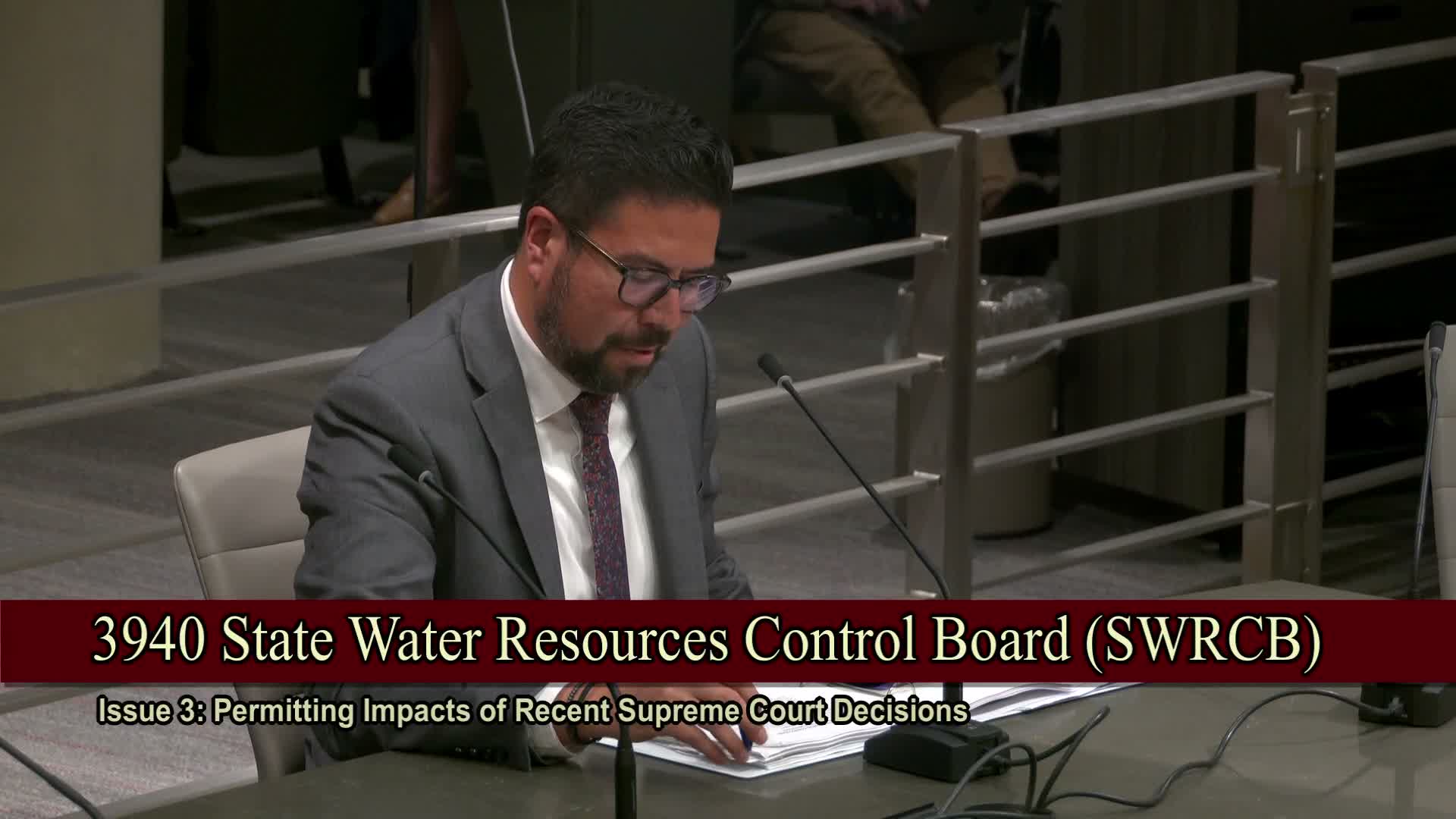
Chair Joaquin Esquivel said the board requested $2.6 million in 2026-27 and 12 ongoing positions from the Waste Discharge Permit Fund to conduct essential permitting and enforcement work. "These resources are really critical for us to, again, try to at least just get back to where we were prior to this federal decision," Esquivel said.
The LAO recommended the Legislature apply a high bar to new proposals but supported this request, noting the Water Board's report to the Legislature documenting longer permitting timelines and the operational gaps the board identified. The LAO also suggested the Legislature consider statutory changes so state authorities are better aligned to substitute for federal tools that are no longer available, including adjustments to enforcement authorities and water‑quality planning mechanisms.
Esquivel and board staff said the federal narrowing of "waters of the United States" has removed routine federal tools and permits that had been efficient and that state processes can be less proactive and impose lower penalties. The board submitted an implementation report in January and said last year's 26 positions previously approved are largely filled and regional offices are already beginning to use those resources.
The committee did not vote. The LAO and the Water Board asked the Legislature to consider statutory fixes (the board referenced an existing policy bill, SB601) alongside the budget request to ensure state processes are as efficient as possible while the new positions are added and trained.