Get Full Government Meeting Transcripts, Videos, & Alerts Forever!
Get email alerts on the Zoning Overhaul topic
No spam. Unsubscribe anytime.
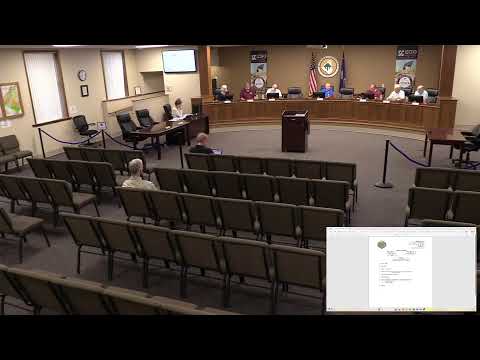
Oconee County planning commission advances Chapter 38 rewrite, removes residency limit on complaints
Summary
The Oconee County Planning Commission reviewed proposed zoning code changes in Chapter 38, voted to strike a provision that would have limited who may file complaints by planning district, and assigned staff and the county attorney to clarify definitions and reporting timelines for complaints and nonconforming structures.
The Oconee County Planning Commission on Monday advanced a multi-meeting review of Chapter 38 — the county's zoning ordinance — and voted to remove a sentence that would have required complainants to live in the same planning district as the alleged violation.
The change came after public comment and a lengthy staff discussion about how complaint handling currently works. Diane Hester, the planning director, said that since she began in the office staff have not enforced the residency restriction and that complaints are logged and investigated; she said the 10-day response period exists to ensure staff follows up. "If we get a complaint, we go out and evaluate it," Hester said.
Commissioners debated whether the code should clarify the 10-day window as calendar days or business days; the commission agreed to define response timelines as business days to set clearer expectations for both complainants and staff. A commissioner moved to remove the residency requirement; the motion carried without a recorded roll call.
The panel also directed staff and the county attorney to return with precise drafting changes on several open issues: whether certain permit-waiver language should be removed or reworded; how detailed "site plan" requirements should be framed so routine work is not unduly burdensome; whether the phrase "as-built plan" should be interpreted to require full surveys in all cases; and how to define "altering," "changing" and "expanding" for nonconforming structures.
On nonconforming structures, commissioners sought clearer definitions so owners and staff know when physical or use changes to a building would alter its nonconforming status. Commissioners discussed examples such as a grandfathered house that's two feet into a setback or a single-family home that later becomes a professional office. "If it's a change in use, it might affect the whole structure," one committee member said; another added that the attorney should confirm whether the phrase "shall be strictly construed" is legally appropriate in the ordinance.
The commission approved a text change to move an overarching summary sentence into the header of the nonconforming-structures section to reduce duplication and tasked the attorney with drafting the precise definitions and legal framing.
What happens next: staff will search past permitting records for examples of waivers, draft clearer language on as-built documentation and site-plan expectations, prepare example case studies or an appendix to guide applicants, and return proposed ordinance edits and attorney guidance at a future meeting. The BZA (Board of Zoning Appeals) will be explicitly named in sections that allow special exceptions.
The meeting also produced several procedural votes (appointing the planning director as secretary and approval of minutes) and concluded with action items for staff and counsel to present draft language back to the commission.