Get Full Government Meeting Transcripts, Videos, & Alerts Forever!
Get email alerts on the Body Worn Cameras topic
No spam. Unsubscribe anytime.
Policy committee to add community‑trust language to SRO body‑camera MOU; revised draft due June 2
Summary
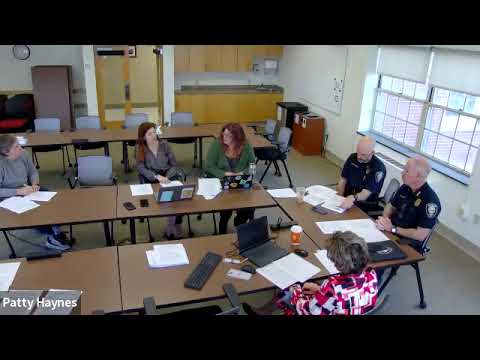
The school board policy committee reviewed a proposed memorandum of understanding to extend body‑worn cameras to school resource officers, set a June 2 deadline for a revised MOU draft, and tasked the committee with drafting a handbook policy for the next school year.
The school board policy committee reviewed a proposed memorandum of understanding (MOU) to govern school resource officer body‑worn cameras and asked legal staff to deliver a revised draft by June 2 so the MOU can appear on the board agenda for June 9. Committee members agreed the board should later adopt a district policy referencing the MOU for inclusion in the student handbook before the next school year.
Committee members focused on ensuring the MOU and the forthcoming policy protect student privacy while preserving law‑enforcement access when legally required. Jennifer Smith of the legal department framed the committee’s role, asking whether members were being asked to approve a policy or simply accept the MOU; the group agreed the immediate step is to finalize the MOU and then develop policy language that describes the relationship between the district and police.
Deputy Chief Mike Maloney defended the department’s experience with body cameras, citing several practical benefits. "Transparency, accountability, training, quality assurance," he said when summarizing the program’s goals, adding that since implementation the footage has been "very very successful" for prosecutions, citizen complaints and training. He described device operation and redaction tools used by the department to protect bystanders’ identities before any release.
Legal staff and committee members discussed limits on public access to footage under state public‑records law and federal education privacy rules. Members and presenters referenced RSA 91‑A (the state right‑to‑know framework) and identified three narrowly defined circumstances in which body‑cam footage is more likely to be disclosable: a felony arrest, a use‑of‑force incident, or a discharge of a firearm or deadly force. The committee also reviewed potential FERPA implications if footage were to become part of a student's educational record and noted that parental opt‑out for photos/video would not automatically bar release when a law‑enforcement activation occurs.
On operations, presenters explained device modes and retention categories: cameras have a sleep mode (no buffering), a ready mode (which buffers a short, pre‑activation segment) and a double‑tap activation that immediately records audio and video; routine call‑for‑service footage is queued for deletion unless flagged for prosecution or administrative review. The department said it uses a redaction tool to anonymize incidental bystanders before any disclosure.
Next steps: the committee asked Jennifer Smith to circulate a revised MOU within a week (by June 2), the deputy chief’s September memo will form part of the packet for board review, and the policy committee will draft policy language that references the MOU for inclusion in district handbooks before the start of the next school year.