Get Full Government Meeting Transcripts, Videos, & Alerts Forever!
Get email alerts on the Age Verification topic
No spam. Unsubscribe anytime.
Senate passes age-verification bill for commercial sites with pornographic content
Summary
House File 864, which requires reasonable age verification on commercial websites and apps where a substantial portion of content (33% or more) is pornographic for minors, passed the Senate after adoption of a strike-and-replace amendment; supporters cited child-protection and privacy safeguards, and the final roll call was 46-0.
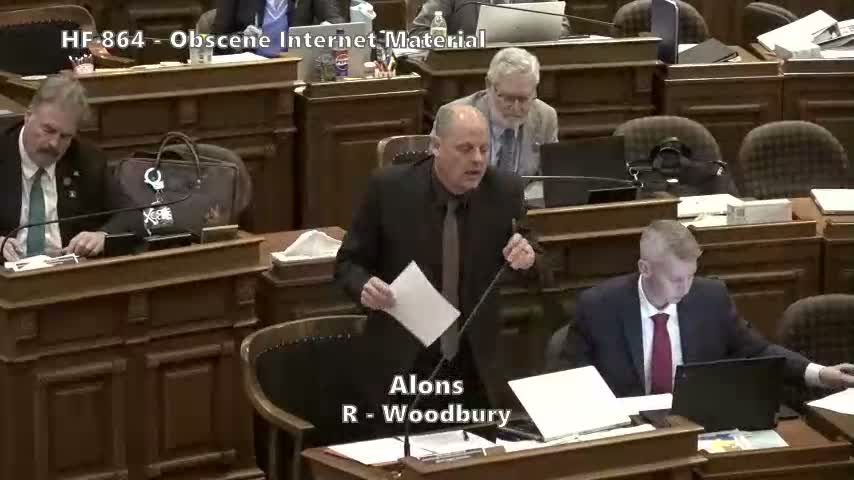
Senator Allans floor-managed House File 864 as a narrowly targeted bill to require age verification on commercial websites and apps where a substantial portion (33% or more) of content is pornographic for minors. He said the measure follows a Texas statutory model and includes privacy safeguards, limited data retention, and prohibitions on selling or sharing personal data.
The strike-after amendment (Senate Amendment 52-31) retains the bill's age-verification concepts while aligning the language with a model the sponsor described as validated by the U.S. Supreme Court. "This strike after amendment retains the age verification concepts in the original well crafted bill, but more closely follows the Texas law that has been validated all the way to the US Supreme Court," Senator Allans said.
Senator Salmon offered personal testimony in support, describing a family member's struggle with an unwanted attraction that began after exposure to online material and arguing the bill would put a "speed bump in the pathway of a child who might stumble into this damaging and dangerous influence." The sponsor said the bill applies to commercial sites where a substantial portion of content is pornographic for minors (33% or more), requires reasonable age verification such as secure digital ID or approved methods, and includes privacy protections.
The Senate adopted the amendment and the bill as amended by voice votes, and the secretary reported a roll-call of 46 ayes and 0 nays. The measure was declared passed and ordered messaged to the governor.