Get Full Government Meeting Transcripts, Videos, & Alerts Forever!
Get email alerts on the Municipal Budget topic
No spam. Unsubscribe anytime.
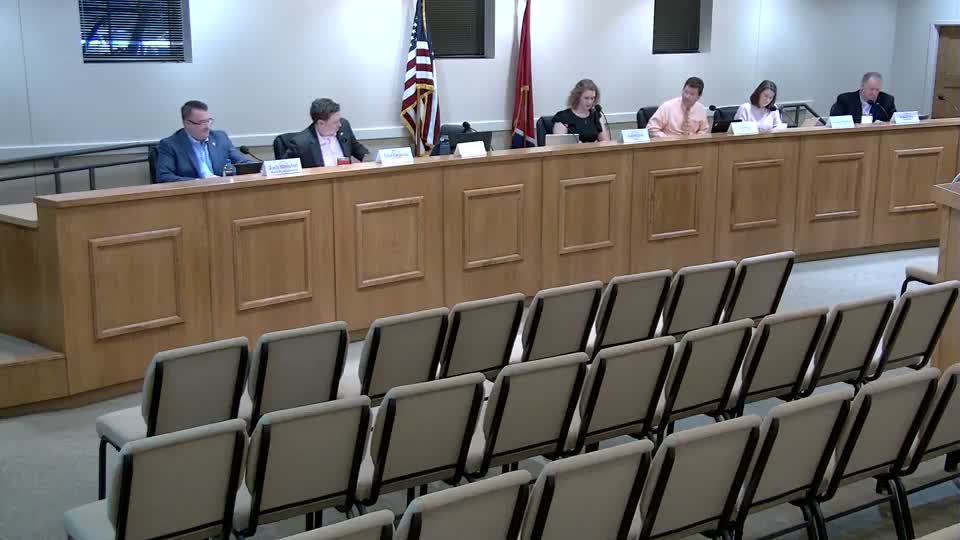
Nolensville commissioners press staff on contingency, debt and how to pay for a planned police headquarters
Summary
Town staff presented a flexible FY2027 budget model that recommends a $300,000 contingency and six new positions; commissioners pressed for clearer plans to shift fire‑station debt into the general fund, weighed a capital tax adjustment to fund a proposed $15–16 million police headquarters, and requested more budget work sessions before first reading.
Town Manager Victor presented a recommended FY2027 baseline budget and a scenario‑driven spreadsheet that staff said would let the board toggle hires, capital projects and revenue assumptions.
The presentation laid out staff recommendations to preserve roughly 2.5 percent of projected revenues (about $300,000) as a contingency/freeboard and to fund six of 11 requested positions — including a police officer and administrative roles — at an estimated personnel cost in the roughly $450,000 range. Victor told commissioners the tool shows a projected revenue line of about $12.7 million under current assumptions and that recent commercial openings (Publix and adjacent tenants) could add as much as $700,000 annually in sales tax versus earlier, lower estimates.
Why it matters: commissioners said the model still leaves open how to treat major, near‑term debt obligations and how to pay for planned capital investments. Mayor Haley Gallick told colleagues she would "vote against a budget that does not address more aggressively the debt service into the general fund," saying she was particularly concerned about the remaining fire‑station debt and the town’s exposure if impact‑fee revenue becomes unavailable because of litigation. "We should not have relied solely on adequate facilities tax," Gallick said, adding that she wanted changes in the FY2027 presentation that more directly address the fire‑station debt.
Big-ticket project and options: staff estimated the police headquarters in its current configuration could cost in the $15 million to $16 million range and said an annual debt‑service estimate used in the model was about $1.1 million if financed. Victor outlined two broad options: (1) set a capital‑specific tax rate now (a gradual capital adjustment) to build a dedicated fund over time; or (2) borrow when needed and repay over 20 years, which would incur interest. "You either set a rate to bring in enough money annually so that you'll have the money you need by the time it rolls around, or you set a rate to pay for it over 20 years and pay interest on it as well," Victor said.
Debt and grants: commissioners discussed a separate possible near‑term obligation tied to the town’s application to TDOT — staff said Nolensville made it through an initial round for Knowlansville Road widening and Rocky Fork improvements, and that TDOT has asked for a potential $500,000 local match by October if selected. Mayor Gallick also flagged an outstanding impact‑fee lawsuit that staff estimates could force repayment of older fees; commissioners said they wanted that litigation’s likely fiscal impact included explicitly in debt‑service planning.
Process and next steps: several commissioners urged additional, dedicated budget work sessions so staff and commissioners can run the model together and test tradeoffs (positions, merits, contingency size, tax adjustments). Vice Mayor Salameda and others supported at least one special meeting to focus solely on the budget rather than combining it with a multi‑item workshop. Staff agreed to propose dates and to provide clearer line‑item clarifications — including a detailed debt‑service schedule and a breakout of which capital projects depend on adequate‑facilities (impact) fees — before first reading of any tax adjustments or budget ordinances.
What wasn’t decided: the board did not adopt a tax increase or a final schedule for moving the fire‑station debt into the general fund; commissioners asked for more analysis and an additional meeting to refine options prior to first reading and the June adoption deadline.