Get Full Government Meeting Transcripts, Videos, & Alerts Forever!
Get email alerts on the Landscape Buffers topic
No spam. Unsubscribe anytime.
Board allows reduced buffers and modified setbacks for constrained commercial lots, with conditions
Summary
The Board of Adjustment approved landscape‑buffer reductions and setback variances for small, constrained commercial parcels — including a drive‑through container restaurant at Old Pearsall Road — after finding unique site hardships and amending motions to require minimum buffers and mitigation.
The San Antonio Board of Adjustment approved several site‑specific variances for constrained commercial parcels — narrowing landscape buffers and rear setbacks after lengthy staff presentations and applicant testimony about lot shape, right‑of‑way constraints and existing site conditions.
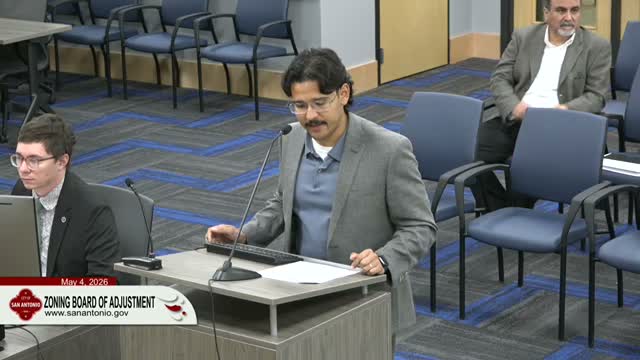
At 5070 Old Pearsall Road (ADA Consulting Group), staff opposed elimination of required 15‑ and 30‑foot landscape buffers citing public‑interest concerns. Applicant Taylor Erickson said the lot was isolated by past right‑of‑way dedications, preserves an existing oak and that a zoning change would be costly and slow. Commissioners pressed the applicant on tree preservation, notification counts and whether reduced buffers could offer compromise. The board adopted an amended motion that reduced the street buffers to 10 feet and left a reduced (accepted at 5 feet) buffer at the rear after a friendly amendment; commissioners found the lot shape and required dedications constituted a hardship and approved the variances as amended.
Separately, the board granted setback and buffer relief at 720 Northwest 24th Street to allow a 12‑foot rear setback and reduced buffers so the owner could formalize a pavilion/food‑truck configuration on a long‑standing commercial lot. The board also approved other small‑site variances where the record showed preexisting constraints and staff had not identified adverse safety impacts.
What the approvals require: Motions were read with findings of fact tying hardship to lot shape, prior right‑of‑way dedications and preexisting conditions; in at least one case the board specified minimum buffer widths (10 ft along arterial streets, 5 ft at the rear) as part of the approval. Staff advised applicants to expect permitting and plan‑review conditions following BOA action.
Why it matters: Approvals carve narrow exceptions for development on very small or irregular commercial parcels; the board emphasized compromise (reduced, not eliminated buffers) to balance lot usability and public‑realm concerns.
Next steps: Applicants proceed to plan review and permitting; staff will verify tree and drainage commitments as part of plan discipline reviews.