Get Full Government Meeting Transcripts, Videos, & Alerts Forever!
Get email alerts on the Land Use Pud topic
No spam. Unsubscribe anytime.
Rose Star subdivision prompts prolonged debate over PUD density, conservation easements
Summary
A proposal to carve three single-family lots from upland inside a codified PUD drew sustained public scrutiny on May 6, with residents and environmental advocates pressing staff and the developer for documentation showing that earlier conservation easements and bonus-density calculations remain intact. The TRC continued the item to June 3 for legal and technical follow-up.
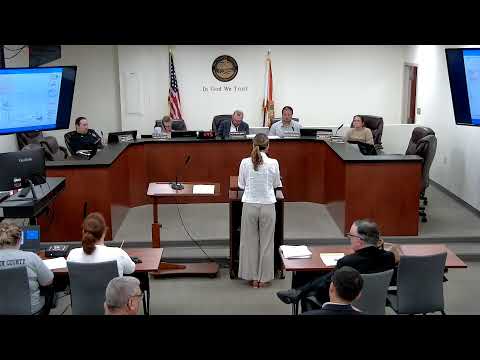
A contentious exchange at the Walton County Technical Review Committee on May 6 centered on a proposal to subdivide upland parcels inside the codified Walton Apartments planned-unit development (PUD), known in their files as the Rose Star Subdivision.
Planning staff said the developer had moved most sensitive wetlands and buffers into common open space and that recorded conservation easements (about 19.8 acres) appear in county files and in DEP records. "Everything here is on uplands, not in a conservation easement," David Campbell, the applicant’s engineer, told the committee, urging that the three proposed lots be recognized as upland building parcels rather than as changes to the PUD open space. He said the team had reduced the plan from four lots to three after learning the coastal-hazard line affected one lot and that the proposal is intended to minimize environmental impact.
But the project prompted sustained objections from neighbors and environmental groups who questioned whether the county had correctly tallied the bonus-density points and preserved the acreage required by the original PUD ordinance. "Unless they have gone back to the Board of County Commissioners, they do not have approval to reallocate phase‑2 density as a minor DO," Melissa Ward, a certified planner representing the estuary conservation group, told the committee, urging that any change to the PUD’s future-development allocations be handled as a major amendment. Other residents raised concerns about prior land transfers, recorded restrictive covenants and whether roadway easements and maintenance obligations were settled.
County staff and legal advisers said the record contains conservation-easement instruments and an overlay ordinance, but they recommended a focused legal and technical review before the committee acts. Staff asked for a briefing that reconciles the PUD ordinance, recorded easements, and any settlement agreements affecting easement locations. The committee voted to continue the item to the June 3 TRC meeting to allow staff, the developer and county counsel to provide the requested authority-level documentation and to resolve remaining technical questions.
Next steps: staff will compile the PUD ordinance, recorded conservation easements filed with DEP, and any settlement or easement instruments for a joint legal/technical review; the TRC will reconvene the item on June 3.