Get Full Government Meeting Transcripts, Videos, & Alerts Forever!
Get email alerts on the Traffic Control topic
No spam. Unsubscribe anytime.
Hinsdale trustees approve first readings to convert two intersections to stop control
Summary
Board members introduced and placed on consent ordinance amendments to convert Lincoln/Ayers to a four‑way stop and change Oak/1st from a two‑way yield to a two‑way stop citing police crash reviews, traffic counts, and resident input.
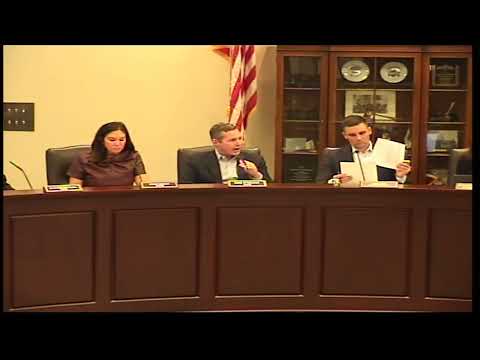
Trustees on May 5 advanced first readings and placed on the consent agenda two ordinance amendments to change stop/yield controls at two Hinsdale intersections.
Trustee Siffler introduced item 6b to convert North Lincoln and Ayers to a full four‑way stop after a police review and resident feedback. Siffler said average daily traffic on Lincoln is "about 1,500 vehicles," compared with "only 300 vehicles going on Ayers," and staff recommended installing stop signs on Ayers to make Lincoln the through street. Deputy Chief Lilly told the board police officers contacted nearby homes and found no resident opposition.
Trustee Boehnke cautioned that mapping applications may reroute nonresident traffic onto nearby streets, such as Vine Street, after the change, but trustees said they balanced that risk against safety benefits and discussed a one-year follow-up traffic count to assess effects. Trustees agreed to use flags to make the new signage visible upon installation and said public works could have signs in place quickly if the board approved the action on May 19.
On item 6c, staff reported the Oak and 1st Street location has poor sight triangles—caused by an elevated parkway and mature trees—and two right-angle collisions in three years, leading police to recommend converting the two‑way yield to a two‑way stop; nearby residents contacted did not object.
Both items were presented as first readings and placed on the consent agenda for formal approval at the next meeting; trustees discussed timing, enforcement, and follow-up traffic measurements.