Get Full Government Meeting Transcripts, Videos, & Alerts Forever!
Get email alerts on the Special Education Incentives topic
No spam. Unsubscribe anytime.
School board approves three‑year incentive plan aimed at hiring and keeping special‑education staff
Summary
Montgomery Public Schools approved a three‑year recruitment and retention package for special‑education teachers, paraprofessionals and registered behavior technicians that district staff say would cost up to $1.1 million and be split between special‑education funds and ad valorem revenue.
Montgomery Public Schools’ board approved a three‑year recruitment and retention incentive package intended to reduce vacancies in special education.
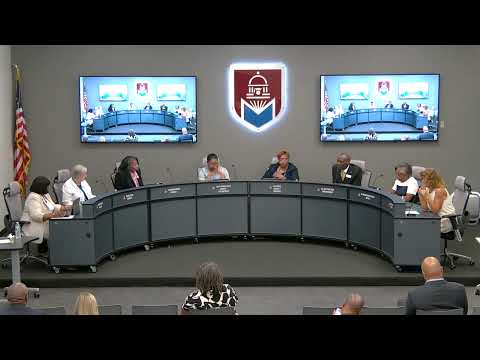
Katrina Jackson, who presented the plan during the board’s April 28 special called meeting, said the district would offer annual supplements paid in two installments — at the start and end of the school year — and require participants to sign a financial agreement that includes accountability measures and partial repayment if they leave before the end of the commitment. “We are proposing a recruitment and retention bonus for special education teachers and for paraprofessionals and registered behavior technicians for a period of three years,” Jackson said.
Under the proposal presented to the board, new and existing special‑education teachers would receive $4,000 per year for three years, disbursed as $2,000 in August and $2,000 in June, Jackson said. Self‑contained special‑education teachers would receive an additional $1,000 per year (bringing their total to about $5,000 annually), also paid in two installments. Special‑education paraprofessionals and registered behavior technicians would receive a $1,000 annual supplement; paraprofessionals in self‑contained settings would receive an additional $500, Jackson said. Jackson described a conditional award clause that allows the district to withhold or revoke payments under certain conditions.
Jackson told the board the district had estimated the potential cost of the program at roughly $1,100,000 and planned to split the cost between special‑education funds and ad valorem revenue designated for hard‑to‑staff positions. She said the district will perform annual reviews to measure effectiveness and to verify that supplements reduce turnover and provide continuity of services for students with disabilities.
Board members pressed for implementation details. One asked how supplements would be paid; Jackson replied, “It would be paid twice a year in two installments in August and in June of the following year.” She also said previous agreements required partial repayment if an employee left before the commitment period ended and that the district would apply a prorated percentage return in those cases.
Jackson described alternative certification pathways the district intends to recruit from and said she had applied for a state TSEC (temporary special education certificate) grant the district expects will reimburse teachers for training expenses. “The TSEC teachers are reimbursed $600 for every module that they complete, and they also get $1,400 for passing the Praxis for a total of $5,000,” Jackson said.
Jackson also announced a job fair scheduled for April 29, 9 a.m.–1 p.m., at the Frampton Bowl Multiplex, where university representatives offering alternative certification programs will be present.
The board did not take separate final action to appropriate funding during the meeting; staff characterized the amounts as proposals tied to existing funding categories and said they would bring any required budget actions back to the board as needed. The board voted on the consent agenda and moved forward with individual consideration of items; the supplemental for special‑education staffing was presented as information and discussed by the board.
What happens next: staff will finalize program eligibility language, upload the presentation materials for board review and, if needed, bring budget or contract language back for formal action in a future meeting.