Get Full Government Meeting Transcripts, Videos, & Alerts Forever!
Get email alerts on the Emerging Diseases topic
No spam. Unsubscribe anytime.
Board hears updates on foot‑and‑mouth, African swine fever, New World screwworm and H5N1 surveillance
Summary
State veterinarian Brian Deese briefed the board on recent international and regional detections (foot‑and‑mouth in Cyprus and Greece, ASF surveillance in Europe, New World screwworm in Tamaulipas and H5N1 dairy surveillance) and described exercises, revised plans and lab capacity work to bolster Minnesota preparedness.
Brian Deese, the Board’s state veterinarian, walked board members through multiple emerging‑disease concerns and preparedness steps.
On foot‑and‑mouth disease, Deese said recent European incursions are under investigation: “In February, Cyprus had detections of foot‑and‑mouth disease in some cattle… and just last week, I believe it was, Greece also had a detection,” he said. Deese added that sequencing suggests a relationship to an outbreak in Turkey and stressed the importance of cross‑jurisdictional tracking and exercises.
Deese announced a multi‑state foot‑and‑mouth vaccination exercise this summer, explaining that the exercise will ship vaccine placebo material and test storage, distribution and injection procedures on representative facilities to assess operational readiness.
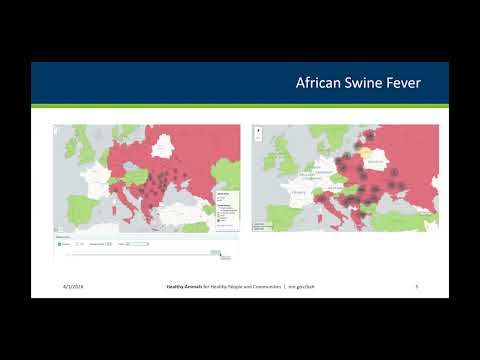
On African swine fever (ASF), Deese reviewed the European landscape and described work to update Minnesota’s ASF plans, including participation on a national swine subcommittee to revise guidance and permitted‑movement language.
He also summarized New World screwworm activity along the U.S.–Mexico corridor, noting detections centered in Tamaulipas and the risk posed by resident and feral animals. “All of the cases for the last two months have been residential animals,” Deese said, highlighting concerns about movement of companion animals, rescue‑group activity and cross‑border transfers.
Deese provided a brief update on H5N1 dairy surveillance, noting that Minnesota’s surveillance found one contributing cow in a positive bulk tank sample last season and that the state continues to use bulk‑tank sampling as part of ongoing monitoring.
Board members used the discussion to probe lessons learned from prior outbreaks and to press staff on engagement with industry partners, laboratory capacity and how surveillance data are communicated to veterinarians and producers. Staff noted ongoing laboratory upgrades and cooperative agreements intended to strengthen diagnostic throughput and support field responses.
The board did not take regulatory action at the meeting but directed staff to continue preparedness planning, share exercise outcomes and coordinate with federal and regional partners.