Get Full Government Meeting Transcripts, Videos, & Alerts Forever!
Get email alerts on the Transportation Funding topic
No spam. Unsubscribe anytime.
Board directs staff to refine public–private transportation improvement agreement with Celebration Point
Summary
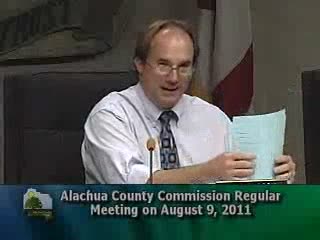
After a full-day presentation and extensive questioning, the board directed staff Aug. 9 to finalize a draft Transportation Improvement District agreement with Celebration Point Partners that would capture incremental revenues for multimodal projects and phased transit service, and to return with revised percentages and language linking spending to service demand.
Alachua County commissioners on Aug. 9 directed staff to prepare a final draft Transportation Improvement District (TID) agreement with Celebration Point Partners that would support road, trail and transit investments in the county’s southwest mobility corridor.
Growth Management senior staff described the proposal as a public–private partnership tying a portion of future incremental revenues inside the district to multimodal infrastructure (roads, a trail bridging I‑75, dedicated transit lanes and a park‑and‑ride), plus annual contributions toward transit service. Jonathan Paul (Growth Management) said the TID would work like a tax‑increment mechanism: the district’s base taxable value would be established in 2012 and incremental growth thereafter would funnel a share (staff proposed 30% through 2025 and 25% thereafter) into a dedicated multimodal fund to pay for projects and service according to triggers tied to development phases.
Paul told the board the developer would commit to build key pieces — Southwest 30th Avenue (including an overpass across I‑75), the Archer Braid Trail extension, dedicated transit lanes and a park‑and‑ride — and would also contribute up to $3 million for transit in early years. The county’s role would be to pledge incremental non‑ad valorem revenues to reimburse qualifying developer-built infrastructure and to set the level of transit service paid from the district account.
Commissioners focused on three items for staff to address before a final agreement is presented: clearer rules for how much of the district increment goes to transit vs. capital, whether the county should retain an option to fund a district circulator (instead of relying solely on RTS), and guarantees for right‑of‑way the plan anticipates from neighboring projects (e.g., Butler Plaza). Chair and several commissioners said the agreement should not obligate the county to more than actual incremental revenues and should include safeguards to avoid open-ended commitments.
The board’s direction: staff should return with a final agreement that (a) revisits the percentage splits and demonstrates the funding model (30%/25% is a working staff proposal) and (b) includes clearer language tying transit allocations to demonstrated ridership/phase triggers and outlining optional circulator service. The board voted 4–1 to move the item forward with those instructions.
Why it matters: The TID would help finance long‑planned alternative corridors and transit service that county and city planners say are needed to relieve congestion on Archer Road and 34th Street and to create transit‑oriented development west of I‑75.
Next steps: Staff will return with a revised draft (target date proposed: Sept. 13) that incorporates the board’s direction on percentages, park‑and‑ride arrangements, and contingencies for annexation and right‑of‑way.