Get Full Government Meeting Transcripts, Videos, & Alerts Forever!
Get email alerts on the Drainage Permit topic
No spam. Unsubscribe anytime.
Drainage board approves discharge permit for Amazon-area site after company agrees to extra monitoring
Summary
The St. Joseph County Drainage Board approved a revised discharge permit after the applicant reduced its requested peak rate, committed to added monitoring at two ditch locations and agreed the board may suspend discharge if neighbors report impacts; farmers and residents said the vote came too close to planting season and questioned aquifer safety.
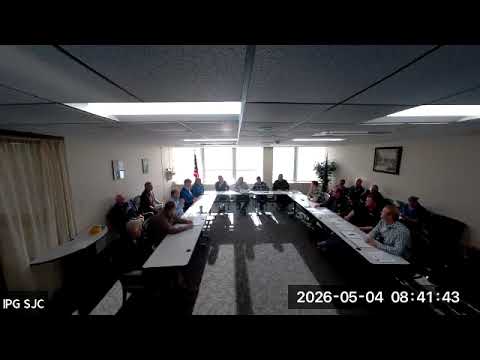
St. Joseph County — The St. Joseph County Drainage Board voted May 4 to approve a permit allowing discharge from a construction site after the applicant reduced its requested peak rate and pledged stepped-up monitoring and data sharing.
A company representative speaking for AWS, Walbridge and Frady Construction said the revised application sets a reduced maximum discharge of 1,300,000 gallons per hour — approximately 3,600,000 gallons per day — a roughly 10% reduction from the earlier request. The representative said the companies have complied with prior permits since permitted discharge began in October 2024 and accepted the board's condition that the board can suspend discharge if it believes property or landowners downstream could be harmed. "We've maintained full transparency with the drainage board and have provided any data related to discharge rates or groundwater elevation levels while the discharge was permitted," the company representative said.
The board approved the permit on a motion that a member said was "subject to the commitments" read into the record; the motion was seconded and carried by voice vote.
Why it matters: Nearby farmers and residents told the board they fear the timing and volume of pumping will harm planting and water supplies. "We, as farmers or as a group of probably 20 farmers out there, [are] concerned about planting season," said Steve Mathis, a landowner south of the Amazon site, who said he and other landowners felt they had not had sufficient chance to speak before the vote. Dan Caruso of New Carlisle cited a Peerless Midwest study that he said estimated aquifer capacity at 46 to 48 million gallons per day and noted the board of commissioners had set a 24 million gallon daily cap on withdrawals for other users; he warned that the combined figures could exceed local capacity.
What the company promised: The applicant told the board it would add two monitoring locations on the Nespezoning Ditch in addition to an on-site discharge monitor. Initially the company will perform daily visual checks and photographic logs and said it will procure automated devices that report levels; the representative estimated device procurement and installation would take about a month. The company also said it will perform an engineering analysis for the two locations of concern and has committed to manage or stop discharge if levels approach problematic elevations.
Public concern and follow-up: Several landowners asked who will halt pumping during heavy rain and criticized the proximity of pumping to planting season. Marcel Corman urged the board to use the ditch fund to clear snags and increase capacity. Board members and staff said they would post monitoring data on the board website and that interested board members could arrange to view monitoring records. The company said it met with local landowners on May 1 and will continue engagement.
The board's approval is procedural: it accepted the company's written commitments and did not set a new numeric countywide withdrawal limit. The drainage board retained authority in the permit language to require suspension of discharge if the board believes negative impacts are occurring.
Next steps: The company will complete the engineering analysis requested by landowners and proceed with device procurement and installation; board members said they will monitor submitted data and follow up with the companies and affected landowners if concerns arise.