Get Full Government Meeting Transcripts, Videos, & Alerts Forever!
Get email alerts on the Land Use Renewable Energy topic
No spam. Unsubscribe anytime.
McHenry County ZBA approves Culver Solar permit after developers pledge tree-planting and wetland protections
Summary
The McHenry County Zoning Board of Appeals voted 6-0 to approve a conditional use permit for the Culver Solar project (Z250097) after the developer described site revisions to avoid a primary wetland, quantified tree impacts, committed $1.3 million for a ComEd interconnection, and pledged a gift to plant nearly 1,000 trees through a county conservation program.
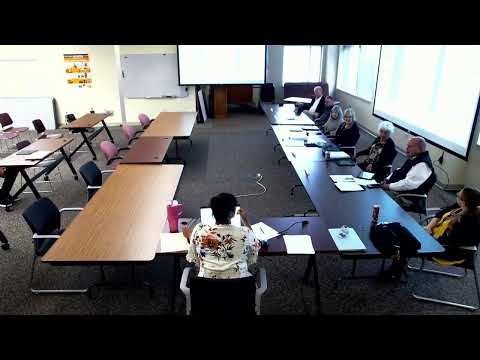
The McHenry County Zoning Board of Appeals on April 13 approved a conditional use permit for the Culver Solar project (Z250097), voting 6-0 after hearing revised surveys and mitigation commitments from the developer.
Paul Bottom, the project’s lead developer, told the board the applicant relocated the access road, shifted array strings and revised the eastern boundary to avoid and preserve the majority of oak and hickory trees 12 inches DBH or greater and to fully avoid Wetland 1 with a 100-foot buffer. “We have taken steps to minimize the impact to the woodlands and the wetlands on the Culver Solar site,” Bottom said during the presentation.
Why it matters: the project will remove hundreds of trees classified as notable species on the survey but is offering restoration money and on-site design changes intended to reduce long-term ecological harm. Board members said the case highlights a gap in county policy because state solar standards limit local discretion once statutory requirements are met.
Survey and impacts: consultant Michael Jockheim of Kimley Horn summarized a site inventory and said 404 “notable species” were surveyed across the site; under the current site plan 252 of those trees are slated for removal. He said there are 66 oaks and hickories identified on the site and that three of those would be removed (one oak larger than 12 inches DBH and two smaller hickories). On wetlands, consultants estimated about 1.5 acres of wetlands occur within the array area but said permanent-versus-temporary impact figures will be finalized during county review. “We are conservatively taking the approach that there will be some type of impact to 1.5 acres, which represents the amount of wetland extent within the current array design,” Jockheim said.
Design and mitigation: the developer said it will use low‑impact construction techniques (wide tires and pile drivers) to reduce turf and soil disturbance, and it has signed a gift agreement with the County Conservation Foundation to fund reforestation through the Big Woods initiative. Bottom said the 28.5‑acre donation will fund roughly 997.5 new trees (using 35 trees per acre as the estimating metric) and that initial plantings will take place in the Coral Ridge area in Marengo. Calvin Carlson, a consultant working on the vegetation plan, said careful equipment selection and seeding with higher‑quality native mixes should improve ecological function relative to the current farmed condition.
Costs and interconnection: Bottom said the developer has pledged $1,300,000 to cover ComEd interconnection costs and associated upgrades, including roughly a 1‑mile line upgrade that will benefit the local feeder network beyond this site. “The ComEd interconnection cost… is $1,300,000 that has been committed,” he said.
Board deliberations and legal context: several board members expressed discomfort with the site’s tree loss. Vicky Gardner said, “This is probably the worst site I’ve ever seen for a solar farm,” and later voted to approve only because the application meets state and county standards. Board members noted that state statute and recent case law constrain local review of solar projects once statutory criteria are satisfied; several urged the county to adopt a county-wide tree ordinance to provide clearer local standards for future cases.
Votes and conditions: the board first approved amended conditions (the staff-corrected site plan date of 04/30/2026) and then approved the conditional use permit itself, both by 6-0 votes. The board’s vote instructions and count were read into the record before the motions were adopted.
Next steps: with board approval, the permit advances per the county’s process; the developer and county staff will complete the detailed impact calculations for permanent versus temporary wetland impacts and coordinate mitigation with county stormwater and conservation authorities. Board members asked the county board to consider a tree ordinance to guide future projects and clarify which trees should be protected or mitigated.
Sources: public testimony and consultant reports presented at the McHenry County Zoning Board of Appeals hearing for Z250097 (presentation and Q&A), including statements by Paul Bottom and Michael Jockheim.