Get Full Government Meeting Transcripts, Videos, & Alerts Forever!
Get email alerts on the Staffing And Compensation topic
No spam. Unsubscribe anytime.
Glendale Elementary District presents staff survey results; employees favor retention pay
Summary
Carlos Castro, communications coordinator for Glendale Elementary District (4271), presented staff survey results and recommended bargaining priorities for 2026–27, saying employees favored retention pay tied to years of service and listed student discipline and workplace satisfaction as top priorities. The district set April feedback deadlines.
Carlos Castro, communications coordinator for Glendale Elementary District (4271), presented the district’s staff survey results and recommended bargaining priorities for the 2026–27 school year, saying employees most often supported retention pay tied to years of service and named student discipline and satisfaction with working conditions as top priorities.
The presentation summarized responses to three survey questions. Castro said the first question—about how additional funds should be spent—returned responses favoring “retention pay” and “pay by years of service.” He said the district awarded a retention stipend in 2025–26 whose amount was determined by years of service.
The second and third survey questions asked employees to rank workplace priorities. Castro said staff listed student discipline and being satisfied with working conditions as the highest priorities, with respondents repeating those themes when asked for second priorities as well.
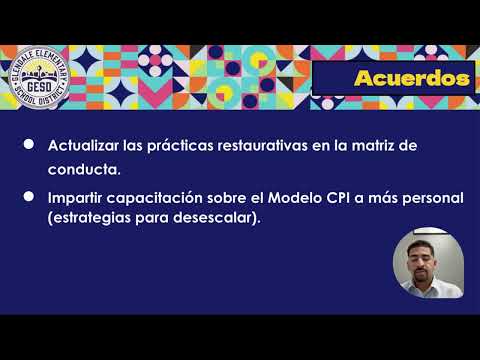
As recommendations, the presentation proposed several changes to the current agreement and district practice: specifying that each site maintain a fidelity committee (a local committee, school learning team or other responsible group) empowered to adjust site budgets and responsibilities; explicitly adding resources, supplies and other equipment to the agreement; and updating restrictive practices in the conduct matrix.
The district also proposed programmatic and training changes. Castro said a decompression study had been completed for all employee groups and that a phased implementation plan would begin in spring 2023; the presentation did not clarify how that start date aligns with the district’s 2026–27 bargaining cycle. The recommendation calls for an annual review to assess the need for additional decompression studies. The presentation also urged expanded training on a model referred to in the transcript as "CP1" and visits to schools during professional learning time to share information about employee benefits.
Other recommendations included continuing efforts to secure child-care discounts for employees; collaborating with the health department and the district’s “Conductal and School Safety” teams (terms used in the presentation) to expand family classes; reviewing arts-related contracting and staffing to meet program needs; coordinating with the articulation department on ELD (English language development) class sizes and transitions; and studying programs or events that adapt to different schedules and bell times.
Castro said paraprofessionals assigned from special education to English-language programs would begin full-day computing sessions on Wednesdays; the presentation gave no additional details about staffing levels, funding or how the change will be implemented.
The presentation directed staff to scan a QR code or click a link to vote; Castro said voting must be completed before Wednesday, April 1, 2026. He also invited questions and comments on the recommendations to be submitted by April 26, 2026, for inclusion in the consultation recommendations.
No formal motions or board votes were recorded in the presentation. The district’s communications office provided the summary and requested staff feedback on the items above.