Get Full Government Meeting Transcripts, Videos, & Alerts Forever!
Get email alerts on the School Finance topic
No spam. Unsubscribe anytime.
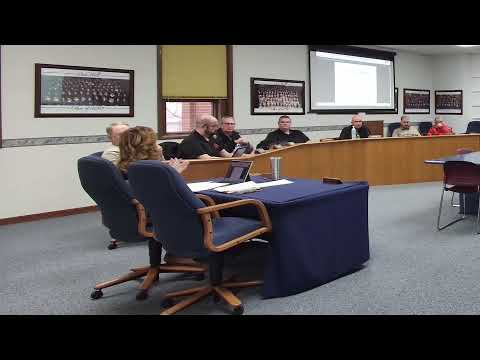
Oak Hill United School Corp board begins $10 million unified-project process to preserve bond capacity
Summary
At a second preliminary determination hearing, the Oak Hill United School Corp board authorized steps to establish a unified project capped at $10 million to preserve future borrowing flexibility and adopted related resolutions; officials said the move aims to avoid a referendum if projected debt tax rates top the 0.70 threshold.
The Oak Hill United School Corp board held a second preliminary determination hearing and moved to authorize a unified project of up to $10 million so the district can preserve the option to borrow for facility repairs and equipment without triggering a costly referendum, officials said.
The superintendent, Hardman, told the board that state law requires a public hearing before a school corporation spends more than $1 million per building financed by bonds or a lease and that recent changes in how net assessed value is calculated could push the district's debt tax rate above the 0.70 threshold next year. "If we were to try to do this next year when our rate would go above 70 cents, it would require us to go to a public referendum," the superintendent said, explaining the timing urgency.
Dr. Hartley summarized the required resolutions, saying a project resolution "is required when the school is planning to spend more than $1 million per building" and that the preliminary determination resolution sets the project's total cost, the maximum annual payment and lease term. Dr. Hartley also noted the unified project cap of $10 million and provided an estimate of potential interest costs if the full amount were issued on a 20-year schedule.
Officials emphasized the board is not obligated to borrow the full $10 million. The administration described the unified project as a planning tool that allows multiple issuances over time tied to actual facility needs — roofing, paving, HVAC, buses, equipment or technology — and said each issuance would be limited to no more than a 20-year repayment term to align costs with asset useful life. "This does not mean that the district plans to borrow $10 million at this time," the superintendent said.
Meeting materials and a municipal advisor from Baker Tilly, Bia Gray, were cited as sources for the financing analysis and projected tax impacts; the administration said statutorily required financial details are available on request and included in the meeting packet.
The board called for motions and seconds to adopt the project resolution, the preliminary determination resolution and a declaration of official intent to reimburse certain pre-closing expenditures from bond proceeds. The transcript records a voice saying, "All those in favor," but does not include a roll-call tally or recorded votes by name in the transcript provided.
The hearing concluded with the board returning the meeting to its regular order. The administration said the district will continue to work with its advisors and hold the required hearings before any issuance tied to the unified project.