Get Full Government Meeting Transcripts, Videos, & Alerts Forever!
Get email alerts on the Teleconference Policy topic
No spam. Unsubscribe anytime.
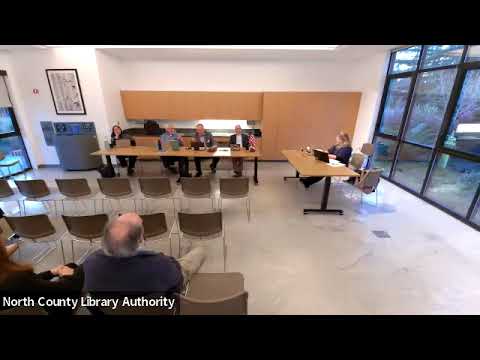
NCLA discusses teleconference policy after SB77; board prefers audio-only public participation pending legal review
Summary
Staff briefed the board on SB77 and a draft teleconference policy; directors raised concerns about public notice, cybersecurity and accessibility, voiced a preference to limit remote participation to audio, and asked staff to seek city attorney review before adopting new rules.
Staff presented a draft teleconference policy and summarized state changes under SB77 that clarify how legislative bodies may allow remote participation. The presenter said SB77 establishes qualifying elements for 'mandated entities' and that NCLA does not meet those thresholds, but staff recommended adopting parts of the model policy to preserve transparency while complying with state law. "SB77 dictated certain qualifying elements that make legislative bodies mandated entities," the presenter said.
Board members questioned how meeting announcements and meeting packets are published, noting that the authority's page is nested under the city web portal and that some residents must subscribe to receive notifications. One director said subscription-based notice risks excluding members of the public who do not use the listed email address.
Several directors expressed cybersecurity concerns following recent incidents elsewhere and favored restricting remote public participation to audio rather than video. One director said the authority should prevent disruptive behavior by limiting the public to audio participation and allowing written comments as an alternate channel. A different director said the policy should be as restrictive as law allows.
Directors also asked that the draft policy be reviewed by legal counsel before any formal adoption. While staff framed the draft as a discussion item rather than an action item, several members said they could not support adopting the policy immediately without a city attorney's confirmation that the draft complies with state requirements. The board provided direction to return the policy for legal review and further consideration at a future meeting.
The board took no formal vote on the teleconference policy at this meeting.