Get Full Government Meeting Transcripts, Videos, & Alerts Forever!
Get email alerts on the Protective Orders topic
No spam. Unsubscribe anytime.
Appeals Court hears challenge to termination of 209A protective order
Summary
In a special sitting the Appeals Court reviewed an appeal challenging a trial judge’s termination of a 209A protective order, with counsel disputing whether the judge applied the required clear‑and‑convincing Caruso standard or improperly relied on collateral concerns such as college applications.
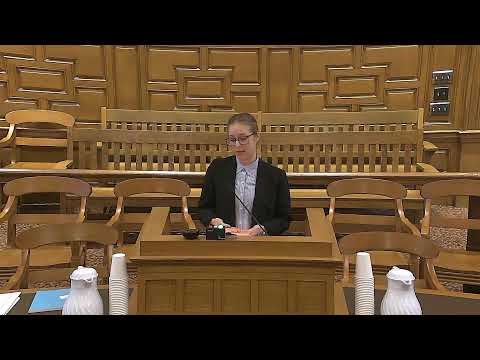
The Appeals Court on a special sitting heard argument in 24P1224, SB v. LM, a challenge to the trial court’s termination of a 209A domestic‑violence protective order.
Appellant counsel (identified in the record as Miss B) told the panel the case turns on the proper application of the termination standard—citing McDonald/Caruso—and said the defendant bears the clear‑and‑convincing burden to show a significant change in circumstances and that the plaintiff no longer reasonably fears imminent serious physical harm. Counsel argued the trial judge ‘‘emphasized that he was not going to hurt somebody’s opportunity to go to college’’ and therefore improperly relied on collateral, non‑statutory considerations rather than making the required on‑the‑record findings under the Caruso standard.
The appellant (speaking from the record) described safety concerns documented in an affidavit and said dispositions in juvenile or child‑welfare proceedings did not eliminate the risk; the appellant also criticized the judge’s use of verbal conditions after terminating the order, calling those conditions ‘‘not provide[ing] any level of concrete protection’’ and saying they left the parties with continuing uncertainty about whether an order existed and what prohibitions applied.
Respondent counsel, Sarah Spaford, countered that the judge had broad discretion to weigh demeanor and credibility, and that the record supported a finding that significant changes occurred (the juvenile moved to the father’s home; the juvenile was no longer in the same school program as the sibling named in the order; certain delinquency matters were dismissed). Spaford said the judge could permissibly consider the totality of circumstances and that, while written findings would have been helpful, the judge’s credibility assessments and the record supported termination.
The panel repeatedly asked whether the judge’s comments about college‑application impacts demonstrated reliance on collateral consequences rather than the admitted change‑of‑circumstances evidence. Appellate counsel urged vacatur of the termination and remand for proper findings; respondent counsel argued the judge’s exercise of discretion should be affirmed. The panel noted that written findings would ease appellate review and took the case as submitted. The court said it would issue decisions later.
Why it matters: The appeal centers on how courts apply the Caruso/McDonald standard when termination of a protective order is contested and on the extent to which collateral effects—like educational opportunities—may lawfully influence termination. The outcome could clarify the level of factual findings lower courts must place on the record when they terminate 209A orders at the request of a respondent.
The Appeals Court took the case under advisement and will issue an opinion in due course.