Get Full Government Meeting Transcripts, Videos, & Alerts Forever!
Get email alerts on the Land Use Annexation topic
No spam. Unsubscribe anytime.
Planning commission recommends City Council certify EIR and advance Copper Trails specific plan and 681‑acre annexation
Summary
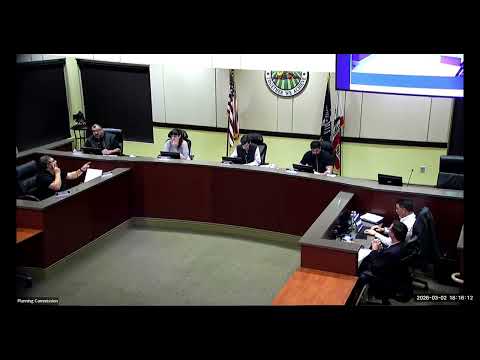
After several hours of staff presentation and public comment about schools, traffic and fees, the Ceres Planning Commission voted to recommend that the City Council certify the final environmental impact report and approve the Copper Trails Specific Plan, prezoning and annexation, sending the 681‑acre proposal to LAFCO for processing.
The Ceres Planning Commission on March 16 voted to recommend that the City Council certify the final environmental impact report and approve the Copper Trails Specific Plan, prezoning and a 681‑acre annexation that would bring roughly 2,400 housing units and large regional commercial sites into city limits.
Planner Vance Jones, the lead consultant, told commissioners the project area consists of a roughly 535‑acre specific‑plan area and a separate 146‑acre "pocket" area that would be included to avoid creating an unincorporated island. Jones said the specific plan "establishes the regulatory framework for long‑term development" and would guide land use, circulation, parks, utilities and financing for the plan area. He said the land‑use map contemplates close to 2,400 residential units and up to about 1.22 million square feet of regional commercial uses adjacent to State Route 99.
The commission heard that the project required a draft and final Environmental Impact Report under the California Environmental Quality Act and that the final EIR identifies mitigation measures and a Mitigation Monitoring and Reporting Program. Jones and EIR staff said the analysis identified five potentially significant and unavoidable impacts: conversion of farmland (direct and indirect), greenhouse‑gas emissions, increased vehicle miles traveled and traffic queuing at the Service Road/State Route 99 ramps. The staff report recommends adoption of findings of fact and a Statement of Overriding Considerations that weigh the project benefits against those unavoidable effects.
George Petrolacis, the developer's land‑use counsel, asked commissioners to recommend certification and approval, saying the project "largely builds on concepts that you've had in your general plan and also in your sphere of influence." He and the consultant team noted that the project includes a public facilities financing plan intended to fund backbone utilities and roadway improvements.
Public comment split between supporters who cited long‑term local investment and jobs and opponents concerned about notice, property rights and infrastructure costs. Dr. Christy Britain, assistant superintendent of business services for Ceres Unified School District, said the district had just received a draft mitigation agreement the day of the meeting and was "cautiously optimistic" but stressed that the district needs assurances on funding for additional classroom capacity and safe routes to school.
Several property owners and longtime local families urged approval as a years‑long community priority. Developer and industry speakers encouraged the city to consider upfront infrastructure financing, including municipal bonding, to make utility stub‑outs and Service Road improvements attractive to large builders.
Opponents and some pocket‑area residents raised questions about noticing, the cost of hooking up to city utilities and potential impacts to private cemeteries and farmland. Staff responded that Conditional Use Permits generally run with the land, that annexation alone does not immediately force property owners to connect to city water, and that current city water connection fees were described during the meeting as approximately $12,000 for a residential water connection (staff noted sewer connection charges are determined by structure size and building permit triggers).
Traffic and public‑safety issues were central to the debate. The project's traffic consultants said the EIR and a separate local transportation analysis identified a package of intersection and roadway improvements — including widening Service Road with separated multi‑use paths and a redesigned SR‑99 interchange — that, if implemented, would reduce long delays and queuing identified in current conditions. City staff noted the interchange design is ongoing with Caltrans and targeted for design completion in the 2027–2028 timeframe; funding for construction will require grant and regional sources.
Commissioners pressed staff on public outreach and public‑safety capacity. The commission recorded that build‑out would add roughly 6,700 residents to Ceres and that, under the city's general‑plan ratio, the Police Department would need to grow substantially (staff reported an on‑paper allotment of 47 sworn positions, about 37 deployable officers at the time of the meeting, and that the projected plan would require more officers to maintain the same service level).
After discussion the commission moved and seconded a motion to recommend that the City Council certify the final EIR, adopt the Mitigation Monitoring and Reporting Program and findings (including a Statement of Overriding Considerations), approve prezoning and general‑plan amendments, adopt the Copper Trails Specific Plan and associated public‑facilities financing plan, and authorize city staff to file an annexation application with the Local Agency Formation Commission (LAFCO). The motion passed on the record as 4 in favor, 1 absent.
The item now proceeds to the Ceres City Council for final decisions on certification, entitlements and any accompanying agreements. If the council approves annexation, the application will be forwarded to LAFCO for final processing. The commission adjourned to its next meeting on April 6, 2026.