Get Full Government Meeting Transcripts, Videos, & Alerts Forever!
Get email alerts on the Tiff Policy topic
No spam. Unsubscribe anytime.
Bradley County committee tightens proposed TIF rules: requires economic and public‑service analyses and sets allocation default
Summary
The Legal & Legislative Committee adopted multiple policy changes to a proposed Tax Increment Financing (TIF) program: it made economic impact plans, independent 'but‑for' analyses, and public‑service impact assessments mandatory; added county finance-chair representation on the review committee; required county legal review of development agreements and an annual IDB report; and set a county default allocation at 50% with a step‑down mechanism for higher allocations.
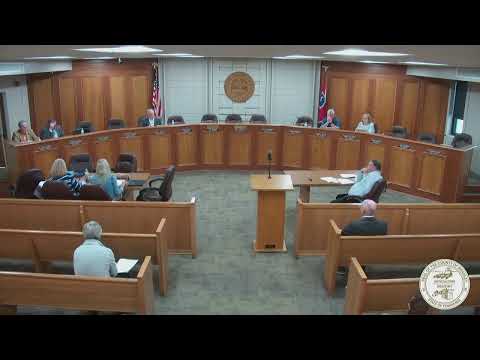
The Bradley County Legal & Legislative Committee on March 25 approved a set of policy changes to a proposed Tax Increment Financing (TIF/TIFF) program intended to guide how the county reviews and approves future TIFF plans.
Most consequentially, the committee voted to require three documents before the board will consider a TIFF application: an economic impact plan prepared by an independent third party, an independent 'but‑for' analysis demonstrating the development would not proceed absent TIFF assistance, and a public‑service impact assessment prepared by local governments. Mayor Davis framed the motion: "an economic impact plan, an independent but for analysis as well as a public service impact assessment be mandatory in any application of TIFF," and the committee approved making those items prerequisites to consideration.
Committee members debated who should prepare and pay for the studies. Industrial Development Board staff reported market quotes for third‑party economic studies in the range of $25,000–$40,000 per analysis and said the county is exploring building in‑house capacity to reduce recurring costs. Legal counsel and staff recommended leaving the economic analysis to independent consultants (paid by applicants) while coordinating public‑service assessments with city and county departments because those departments hold the operational data for schools, fire, police, roads and other services.
The committee also changed governance and transparency elements: it added a county representative to the application review committee—specifically the chair of the county finance committee (or that chair's designee)—to give elected officials earlier visibility into TIFF requests. It required that draft development agreements be provided to county legal counsel for review before execution and that the Industrial Development Board provide an annual report to the county commission summarizing incremental revenues generated, amounts allocated, and project status.
On finance policy the committee moved the county’s default allocation of incremental property‑tax revenues from 80% down to 50%. Mayor Davis said the 50% default would be the starting point; requests above 50% would require a recommendation from the county finance committee and a subsequent resolution of the full county commission. The committee also supported a step‑down example—reducing an approved 80% allocation by 10% every five years until it reached 50%—as a policy option to recover revenue over time if higher allocations are approved.
What this means: the committee established stricter pre‑approval requirements and additional local review steps intended to improve transparency about TIFF projects’ fiscal and service impacts. The changes do not authorize any specific TIFF district or project; they set procedural guardrails and reporting requirements for future proposals. Staff will prepare a redline of the policy incorporating the committee’s amendments and return for review on April 13, with the goal of forwarding a final draft to the full commission for consideration the week of April 20.
Actions recorded at the meeting include committee votes to make the three analyses mandatory, to add the finance‑chair representative on the review committee, to require legal review and annual reporting, and to set the 50% allocation default with the finance committee/commission approval process for allocations above 50%.