Get Full Government Meeting Transcripts, Videos, & Alerts Forever!
Get email alerts on the Governance topic
No spam. Unsubscribe anytime.
Chino council authorizes creation of Chino Community Foundation amid Brown Act discussion
Summary
Council approved staff’s recommendation to establish a nonprofit 'Chino Community Foundation' to pursue grants and donations, preferring a staff‑member board structure while asking legal counsel to clarify Brown Act implications and bylaws; motion passed 4–0 with the mayor absent after public comment urged board independence.
The Chino City Council voted March 3 to proceed with establishing a nonprofit entity to accept donations and pursue grants under the working name "Chino Community Foundation," authorizing staff to prepare incorporation documents and bylaws while directing legal review about open‑meeting implications.
Assistant City Manager Jackie Melendez told the council the foundation would allow the city to pursue private‑sector grants and philanthropic funding not otherwise available to a municipal agency. Staff evaluated three governing‑board options: (1) the council as the board; (2) a mixed board with two council members and community representatives; and (3) a staff‑only board of executive management (staff’s recommended option). Melendez said the process to obtain 501(c)(3) status typically takes about nine months and that bylaws and governing documents would be drafted for council review.
A member of the public who identified himself as "Stevie" (public comment) urged the council to avoid the staff‑only model and warned that a foundation created by council action could be subject to the Brown Act; he recommended option 2 with community at‑large representation to avoid conflicts of interest. City Attorney Fred Galante said the proposed corporation would be a separate entity and clarified that whether the Brown Act applies depends on how the bylaws define the foundation’s subject matter and whether the council appoints members or the foundation receives city funding; he advised the council that following Brown Act posting and noticing rules voluntarily is an option to increase transparency.
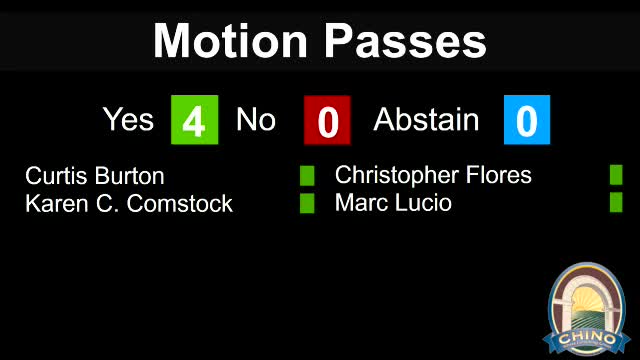
Councilmembers debated transparency, donor confidence and potential conflicts of interest. Several members said they supported staff’s recommendation (option 3) as a practical starting point but asked staff to incorporate best practices for transparency, including voluntary adherence to Brown Act notice and reporting practices and annual reporting to the council. Councilmember Comstock moved and Councilmember Flores seconded staff’s recommendation with direction to staff and counsel to clarify Brown Act implications in the bylaws; the motion passed 4–0 with the mayor absent.
Staff will file articles of incorporation with the California Secretary of State, pursue IRS recognition of tax‑exempt status, develop bylaws and return to the council with details on board structure and any recommended transparency commitments.