Get Full Government Meeting Transcripts, Videos, & Alerts Forever!
Get email alerts on the Workforce Housing Project topic
No spam. Unsubscribe anytime.
Developer pitches workforce housing and shared-parking plan near high school; board asks for lease details and affordability clarifications
Summary
A developer proposed a two‑phase workforce housing project on about 8–8.5 acres adjacent to the high school, asking the district to lease parking stalls (developer to build ~225 stalls) and offering priority access to some units for school staff; board members pressed for details on unit counts, AMI targets, fees, management, security and timelines.
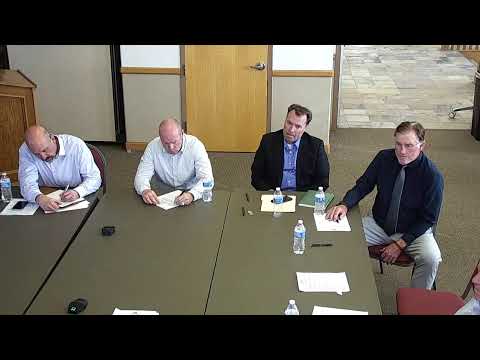
A private development team outlined a proposed workforce housing project adjacent to the high school during the Wasatch County School Board’s March 24 study session, seeking early feedback on a plan that would combine a land contribution from the Hicken family with developer equity, municipal incentives and federal financing.
Russ Watts, the project presenter, said the Hicken family has offered roughly 8–8.5 acres next to the library and fire station and that the developer has been working with the district and the city for about 2½ years. The team proposed a two-phase development intended primarily for people who work in the valley—teachers, first responders and health-care staff—and described shared parking arrangements in which the developer would construct additional parking on district property and lease the spaces to the developer (daytime use by the district; nighttime use by residents).
Project scope and amenities: The presenter described a range of amenities including a recreational center with daycare, pool and splash pad, a mail/communications center, workout space, multiple open parks, pickleball courts and gathering areas. He said phase one would be rental housing and phase two might include ownership opportunities.
Unit counts, affordability and management partners: The presentation included two different unit-count figures in the discussion. In one description the presenter listed 71 one-bedroom, 72 two-bedroom and 73 three-bedroom units (216 units total) as part of the first phase; elsewhere the presenter referred to “142” as the phase-one unit number. The developer described an affordability layering under discussion with HUD guidance: roughly 10% of units at 40% AMI, about 40% at 65% AMI and the remainder at market rate. Mountain Lands (Park City) and the Wasatch Housing Authority were named as management/qualification partners.
Financials and incentives: The presenter said phase one is estimated at about $43 million with approximately $11 million in equity from the developer and the land partners; lenders, he said, generally require about a 6–7% return for projects of this type. He told the board that Heber City had signaled a willingness to defer about $3.4 million in impact fees and that the housing authority had pledged about $750,000; HUD involvement was described as part of the financing plan. Watts estimated 18–24 months before construction would start, contingent on financing and partner approvals.
Board concerns and next steps: Board members questioned lease terms and event access, asked how many of the district’s teachers would qualify for the deeply affordable slots, and raised operational concerns including snow removal, overnight security and possible fee-add-ons that could reduce affordability. The presenter said specific lease terms—maintenance responsibilities, time restrictions for resident parking, snow removal and safety protocols—would be defined in a future agreement drawn up by district counsel (staff member Jared was named as the staff contact for drafting). The presenter said the team would return a proposed agreement for board consideration and that the project cannot proceed without partner approvals.
Why it matters: The proposal links district property use and parking resources to a private project intended to address local workforce housing shortages. If approved, negotiated lease terms and affordability commitments would shape how the district’s property is used and how many staff could practically benefit.
Next steps: The developer will work with district counsel to draft lease terms and return with a formal proposal to the board; the presenter estimated 18–24 months to start, dependent on financing and partner approvals.