Get Full Government Meeting Transcripts, Videos, & Alerts Forever!
Get email alerts on the Tax Increment Financing topic
No spam. Unsubscribe anytime.
Broadwater County’s new TED advisory committee adopts bylaws, hears TIF primer and elects officers
Summary
At its inaugural meeting the Broadwater County Targeted Economic Development (TED) advisory committee accepted bylaws by voice vote, elected Liana Eastey as chair and Mickey Embury as vice chair, and received a detailed presentation on how TED/TIF works and the committee’s role reviewing applications for tax-increment support.
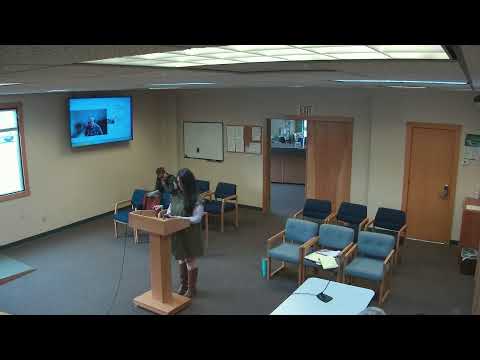
Nicole Brown, Broadwater County’s community development director, opened the inaugural meeting of the county’s Targeted Economic Development (TED) advisory committee and turned the floor over to consultant Courtney Ellis for a primer on how TEDs and tax-increment financing (TIF) operate under Montana law.
Ellis told the committee TEDs are a county- or municipal-created form of tax-increment financing established under state law (Title 7, chapter 15, parts 42 and 43). She said the county must adopt a resolution of necessity, create a comprehensive development plan and show infrastructure deficiencies in the district before TIF can be used. "The Department of Revenue establishes a base year and base taxable value," Ellis said, noting that taxable value is a statutory construct and not the same as market value.
The fiscal context drew specific attention when Broadwater County administrative officer Bill Chiracchio reported the TED’s base taxable value filed with the Department of Revenue for 2019 as $164,172. "That is the base point that was filed with Department of Revenue," Chiracchio said. Ellis added that the base taxable value does not directly equal the dollar amount of annual tax revenue and that meaningful increases in taxable value typically come from new vertical development rather than public infrastructure itself.
Courtney Ellis outlined how tax increment is calculated (mills applied to incremental taxable value above the base), the statutory duration of increment provisions (an initial 15 years that can be extended if tax-increment revenue bonds are issued, with bond terms of up to 25 years), and the kinds of permissible uses (infrastructure, and in some statutory versions workforce housing and assistance to secondary value-adding industry). She said committee members will review applications from entities seeking tax-increment support, ask questions of requesters, and make recommendations to the Board of County Commissioners; any development agreement would then spell out reimbursement or payment terms.
Committee members asked practical questions about the TED’s boundaries, whether property owners can be removed from a district, and whether roads or utilities increase taxable value. Ellis responded that boundaries can be amended by the local government and that the TIF treats the district as a whole rather than tracing increment to a single parcel. On roads and public infrastructure she said, "Typically roads and public infrastructure don't have taxable value in and of themselves because they're publicly owned property," and that vertical building is what tends to drive assessed and taxable-value increases.
Local business owner Ron Embury said he has seen a TID/TED line on his tax bill and asked why he was paying TED taxes if he had not improved his property; he said, "I'm not sure, you know, why I'm paying TED taxes." Ellis and county staff characterized that as a tax-billing display issue in the software used for bills and offered to review individual bills with concerned property owners.
Commissioner Lindsay Brookmeyer led a discussion of proposed bylaws for the advisory committee, including conflict-of-interest disclosure language drawn from statute, staggered terms for members, and the role of county administrative staff in managing agendas and minutes. Charles Freshman moved to accept the bylaws and Justin Tiffany seconded; the committee adopted the bylaws by voice vote with no roll-call recorded and the chair declared the motion passed.
During nominations for officers, Liana Eastey (a committee member) was nominated and elected chair by voice vote and Mickey Embury was elected vice chair. Nicole Brown said the chair will assume the role officially at the committee’s second meeting and staff will support the new officers.
Members discussed past activity and near-term work: Bill Chiracchio said the TED has generated limited revenue and the county has spent some funds on administrative and consultant work; staff and commissioners highlighted water availability, septic/soil constraints and the need for a public water solution as principal hurdles to development in the Wheatland TED. The group noted a planning grant (with WGM named as the consultant) and regional economic-development partners (MBAC) are pursuing engineering and planning work to clarify options.
Public comment included a request from Chiracchio that members review the Department of Revenue’s 2025 tax information for Montana property owners and an offer to present historical financials at the next meeting. The committee scheduled its next meeting for Monday, August 10 at 4 p.m. with a remote/Teams option to be confirmed.
What’s next: staff will circulate the draft application form and a draft development agreement for committee review, and the committee plans a financial overview (using certified values) at a future meeting to better quantify available increment and potential project scenarios.