Get Full Government Meeting Transcripts, Videos, & Alerts Forever!
Get email alerts on the Term Limits topic
No spam. Unsubscribe anytime.
East Palo Alto council directs staff to prepare November term-limits measure with two-term cap
Summary
After public comment and staff briefing on costs and turnout, the East Palo Alto City Council directed staff to prepare a properly noticed November 2026 ballot measure proposing two consecutive terms for council members (partial terms over two years would count), and to return with polling data and a full report.
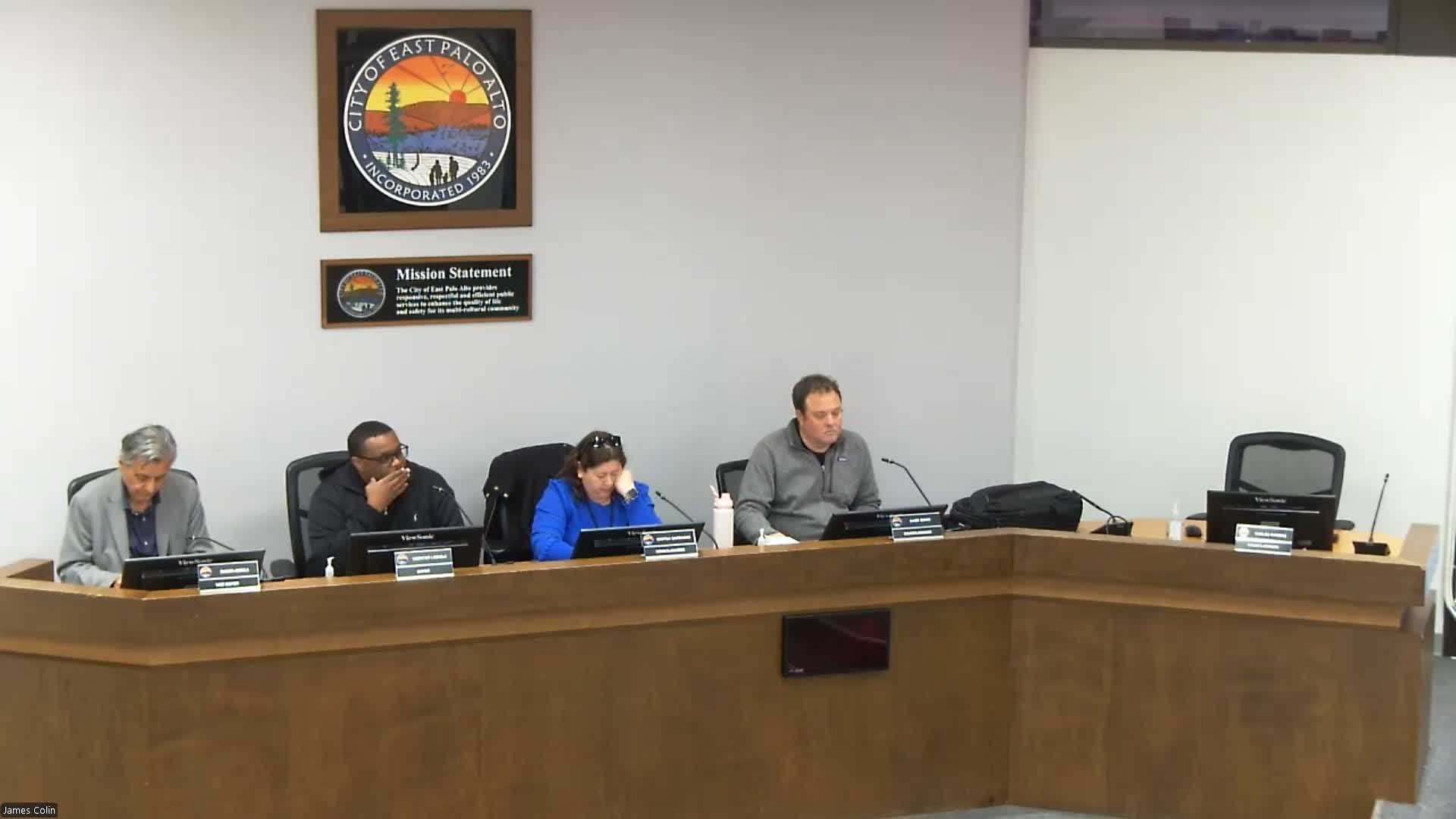
The East Palo Alto City Council moved on March 5, 2026 to direct staff to prepare a November 2026 ballot measure that would limit councilmembers to two consecutive terms and require a sit-out election cycle before they could run again. The direction includes counting partial terms that exceed two years as a full term and asks staff to return with polling data and a properly noticed report before final placement.
Council members framed the question around timing, turnout and cost after a staff presentation outlining three timing options — June 2026, November 2026 and November 2028 — and explaining likely costs and historical participation. City staff told the council that a June special election could cost roughly $75,500–$90,600 while a November placement would likely cost about $63,000–$75,600, and noted that November elections generally draw substantially higher turnout than June or special elections.
“June will likely cost the city thousands more than waiting until November,” a resident on Zoom said during public comment, urging the council to place the measure on the November ballot to save taxpayer money and allow more time for community discussion. Gail Dixon, a longtime resident, urged the council for change: “This is not a place to come and die. We need fresh eyes,” she told the council during public comment.
Council discussion reflected a mix of concerns. Some members favored placing the measure in June to avoid overloading the November ballot and to act quickly; others said November’s higher turnout and lower cost made it the better choice. Assistant City Manager Klima warned that preliminary polling about the city’s image and voter sentiment could affect how a term-limits campaign would interact with a separate bond measure under consideration, and staff told councilmembers that consultants (identified in discussion as FM3) were finalizing a report and slide deck to be posted for transparency.
Because of questions about whether the special meeting was properly noticed for a June-placement vote and requests for more staff analysis, councilmembers ultimately agreed to direct staff to return with a properly noticed item that reflects the council’s consensus (November placement, two consecutive terms, partial terms counting, and a required sit-out election cycle) and to bring the polling and consultant materials back to the council and the public. The clerk recorded the roll call after the motion: Mayor Lincoln, Vice Mayor Briscoe, Council Member Barragan and Council Member Dinan voted yes and the direction carried. The council adjourned the special meeting at 7:06 p.m.
What happens next: Staff will prepare a revised agenda item that incorporates the council’s direction, publish the polling/consultant materials when ready, and return to council for a properly noticed vote on placement and the final ordinance language.