Get Full Government Meeting Transcripts, Videos, & Alerts Forever!
Get email alerts on the Education Gifted topic
No spam. Unsubscribe anytime.
Buckeye Valley staff outline identification, acceleration and enrichment in gifted program
Summary
Gifted coordinators described the district's universal screening, cluster grouping, acceleration pathways (including a new double-acceleration cohort) and project-based enrichment across grades, and noted possible state rule changes from Senate Bill 19 could alter qualification criteria.
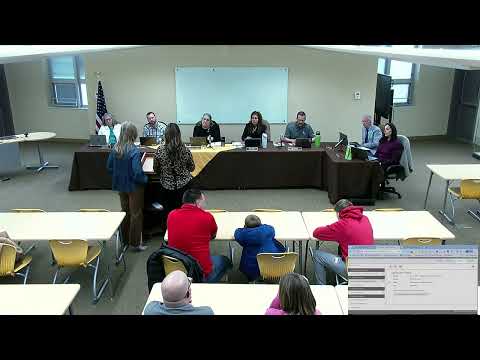
District gifted-program staff told the board Buckeye Valley uses universal screening in elementary grades and state-approved assessments to identify students for gifted services, supplementing screening with teacher and parent referrals. "We administer assessments to all Buckeye Valley students," one presenter said, explaining second-graders take a nonverbal ability test and fifth-graders take a cognitive abilities test.
Presenters described services ranging from cluster-grouping in classrooms and honors/AP offerings at the high school to acceleration pathways. They highlighted a new double-acceleration pathway at the middle school, reporting that 34 of 48 students in the first cohort scored accelerated or advanced on state testing. Staff said students who receive gifted services have written education plans and periodic progress reporting.
The presentation also described project-based work across grades (a second-grade ball-run challenge, third-grade games for kindergarten and a fourth-grade food-drive partnership with the Delaware Hunger Alliance) and noted the district is monitoring Senate Bill 19, which could prescribe state qualification criteria that may require rubric adjustments.
Board members were invited to ask questions; presenters offered a student participant as a firsthand resource. No policy action was taken during the meeting.