Get Full Government Meeting Transcripts, Videos, & Alerts Forever!
Get email alerts on the Education Literacy topic
No spam. Unsubscribe anytime.
Bixby district officials report reading gains after rolling out structured literacy and coaching
Summary
Bixby Schools told the board March 12 that structured literacy, a tiered BTSS intervention model and expanded instructional coaching have driven early reading gains in K–2, with on‑track benchmarks reported rising from 76% to 82% and a midyear Tier 2/3 population of 8.9% in those grades.
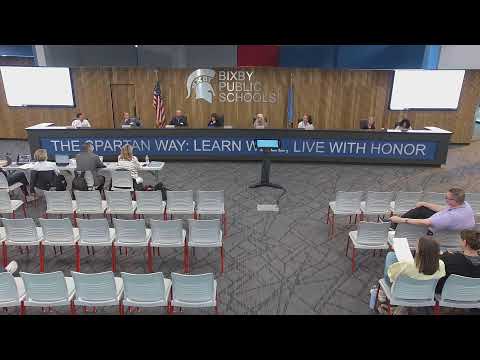
Cheryl Wilkinson, Bixby Public Schools' executive director of teaching and learning, told the board on March 12 that the district’s implementation of a structured literacy program, supported by a team of instructional coaches, is producing measurable early gains in elementary literacy.
Wilkinson and Dina Benvitas, director of special services, said the district has worked to align instruction across tiers of support (Tier 1 core instruction; Tier 2 targeted interventions; Tier 3 intensive individualized instruction) and to provide side‑by‑side coaching so teachers can implement the materials with fidelity. ‘‘We would not have been able to do this without the support of our coaches,’’ Wilkinson said.
Why it matters: staff framed the approach as a research‑based, systematic sequence intended to close skill gaps that students bring to kindergarten and first grade. The district presented benchmark snapshots showing an on‑track rate for K–2 students increasing from 76% at the start of the year to 82% at midyear; staff reported 8.9% of K–2 students remained in Tier 2/3 at midyear and described a month‑by‑month growth target equal to one-and-a-half months of learning for every month of instruction.
Officials described several practical elements of implementation: a new ‘‘ideal literacy block’’ planned for elementary classrooms that totals roughly two hours of literacy instruction daily (including explicit, systematic instruction), coach modeling in classrooms, recorded model lessons for teacher review, and monthly data reviews at the departmental level. Kayla Cardwell, the district’s literacy coach, was singled out for leading teacher trainings and materials implementation.
The presentation also noted the district’s use of technology to scale assessments: staff described an AI reading screener called ‘‘Mirror’’ that lets students read into computers and creates recordings teachers can review. Wilkinson stressed that technology is not a substitute for teachers: ‘‘An effective teacher in the classroom will always be more effective than any piece of technology,’’ she said, while adding that the tool can increase efficiency for running records and targeted practice.
Board members asked about expansion plans, secondary supports and how the district will track progress across middle grades. Wilkinson said the K–2 work is the initial focus and the district plans to expand the approach through upper grades as capacity allows; she also said the district will add EL (English Learner) coordination to ensure services align with the tiered model.
The presentation included examples from robotics and other classroom programs to underscore broader instructional alignment. Wilkinson said more comprehensive year‑end reporting (beginning, middle, and end‑of‑year snapshots and disaggregated charts) will follow as the district collects baseline and progress data.
What’s next: staff said they will continue monthly data reviews, expand coaching supports, roll out the literacy block next year at targeted sites and provide additional reports to the board. Several board members asked for grade‑specific breakdowns (for example, sixth and seventh grades) in future updates.
Sources: presentation to the Bixby Board of Education (March 12, 2026).