Get Full Government Meeting Transcripts, Videos, & Alerts Forever!
Get email alerts on the Land Use Solar topic
No spam. Unsubscribe anytime.
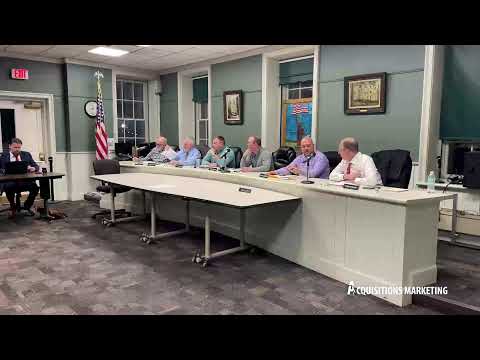
Goshen residents urge zoning board to deny variances for 18 Millburn Road solar project; board leaves written comment open
Summary
At a Goshen Zoning Board meeting, residents opposed variances for a proposed 60‑acre solar project at 18 Millburn Road, citing threats to rural character, water supplies and scenic overlays. The board closed oral testimony but left written comments open for 10 business days, with a cutoff of April 1.
Neighbors of a proposed utility‑scale solar installation at 18 Millburn Road pressed the Goshen Zoning Board to deny variances they say would allow an industrial‑scale array to replace nearly 60 acres of farmland.
"From the bottom of our hearts, please deny these variances. Honor the comprehensive plan you're entrusted to uphold," said Paul Cammarota, identifying himself as a long‑time Goshen resident, during public comment.
Sarah Emanuel, who lives directly across from the site, told the board she was alarmed that a planned 10 MW installation appeared to be split into two 5 MW arrays, a configuration she called a material change rather than a minor technical adjustment. "I'm concerned that this is not a minor technical adjustment, but a material change in intensity, layout, and long‑term impact on our neighborhood," Emanuel said, noting overlays on the property including AQ‑3, a stream corridor, a water‑supply watershed and a scenic road corridor.
Another resident, who identified herself as Marcia, urged scrutiny of potential impacts on the village's three water supplies. "I hope that you sincerely take this into consideration because we need to help support each other in surviving in these things," she said.
At least one speaker raised technical questions about the project's listed capacity. A commenter cited plan figures of about 5,974 kilowatts DC for each array and asked whether DC‑to‑AC conversion could push the project over a 5 MW threshold. A project representative responded that the design was "less than 5 MW at the most" and "not an overflow capacity or anything of the sort," and board staff said they would provide clarified figures in writing during the public comment period.
The board moved to close the public hearing to oral testimony but leave written public comment open for 10 business days, directing written submissions to the building department (attention to Grace) and indicating a cutoff of April 1. "Written comments are just as valuable as personal comments for sure," a board member said as the board formalized the timeline.
Speakers opposing the variances framed their concerns around the town's comprehensive plan, potential runoff and habitat loss, impacts on property values, and the possibility that reconfiguring the project into multiple smaller arrays could be used to avoid heightened review. One commenter named Solar Energy Partners as the project developer and said the company is based out of state; that attribution is reported as the speaker's claim.
The board did not vote on the variances at the meeting. Staff said the written submissions and clarified technical figures will be added to the record and considered before any final decision; the board indicated the item could return at the next meeting.
Next procedural steps: written public comments will be accepted through April 1 (10 business days), and the matter may be revisited at the board's next meeting, which the board later scheduled for April 7.