Get Full Government Meeting Transcripts, Videos, & Alerts Forever!
Get email alerts on the Municipal Budget topic
No spam. Unsubscribe anytime.
Town of Normal adopts 2026–27 budget despite dissent over underpass, EDC funding and fire response
Summary
The Town of Normal adopted its FY 2026–27 operating and capital budget on March 16, 2026, by a 5–1 vote. Council debate centered on the Uptown underpass cost escalation and contractor withdrawal, a $100,000 Economic Development Council allocation, water/sewer rate assumptions and fire/EMS staffing and response goals.
The Town of Normal council adopted the operating and capital investment budget for fiscal year 2026–27 on March 16, 2026, in a 5–1 roll call vote.
Councilmember Lorenz cast the lone dissenting vote, saying she could not support the package as presented. "I can't support this budget," she said, citing concerns about the Uptown underpass, a lack of tax relief for residents and what she described as insufficient near‑term steps on fire and EMS response.
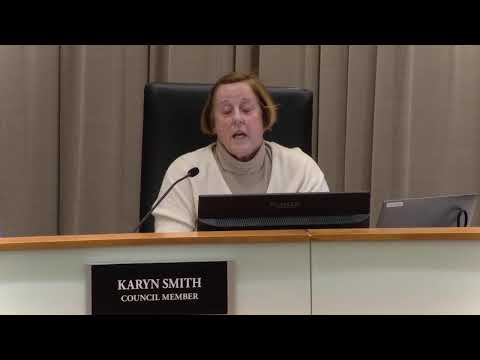
The ordinance sets planning assumptions that include a continued 2% annual water and sewer rate increase used for multi‑year forecasting. Councilmember Smith highlighted that the 2% rate assumption is carried through the forecast for planning purposes and that staff will return to council in June to discuss rate structure changes as needed.
Councilmember Byers urged that the $100,000 line item labeled for economic development be allocated to the Economic Development Council (EDC) when a clear plan is presented. "A strong EDC is vital to the community," he said, while other members said the funds are being "parked" pending the EDC's direction and a future allocation decision by council.
Several speakers pressed the council on the Uptown underpass project after a general contractor withdrew. Public commenter David Bullock said he was "excited" the contractor had pulled out and urged the council to reconsider the tunnel given rising local costs. Resident Jeff Lord, drawing on his construction and banking experience, told the council the project had ballooned from an original $28 million estimate to about $40 million — "That's 42% over," he said — and warned of the fiscal risks of continuing without changes.
Finance staff responded to budget questions about reserves and a roughly $21.19 million projected spend down. "That spend down...is across several funds," said Mr. Yoon, characterizing most of the drawdown as capital spending on projects the town has been saving for over multiple years rather than an operational structural deficit.
Council also discussed fire department issues including staffing, a posted assistant chief position and technology such as emergency vehicle preemption. Chief Hume told the council that the FY 26–27 budget does not yet include specific funding for vehicle preemption technology under current research, but that the town could bring dollar amounts and a budget amendment forward in the year if council chose to fund the technology. Councilmembers asked for clarity on a new performance metric included in the budget: a stated response‑time goal of 5 minutes and 37 seconds that includes turnout (dress) time and drive time.
After extended discussion and public comment, the council adopted the budget by roll call: Miss Smith — Aye; Mr. McCarthy — Aye; Mr. Preston — Aye; Mrs. Lorenz — No; Mr. Byers — Aye; Mayor Koos — Aye. The ordinance and budget were approved, and council members said individual items will return as needed for implementation or further debate.
Next steps noted by staff include returning to council with rate‑structure discussions in June and bringing any specific technology or staffing proposals back as budget amendments or requests during the fiscal year.