Get email alerts on the Digital Accessibility topic
No spam. Unsubscribe anytime.
IT asks $10,000 for consultants as county faces WCAG 2.1 accessibility deadline
Summary
The county's IT director requested $10,000 to hire consultants to audit websites and implement tools needed to meet WCAG 2.1 (ADA) digital accessibility standards, warning of increased 'drive‑by' lawsuits if the county is not compliant by the federal timeline.
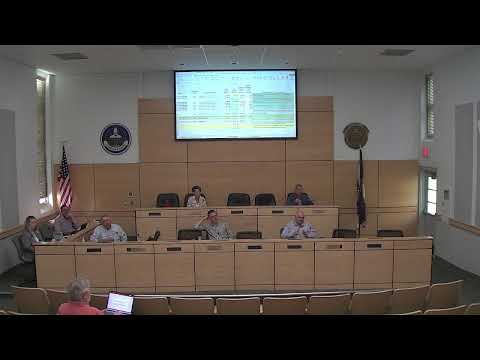
Madison County's IT director, Ellen, told supervisors the county must move quickly to comply with a new federal interpretation requiring certain jurisdictions to meet Web Content Accessibility Guidelines (WCAG) 2.1. "We need to comply with title 2.1 of the WCAG standard which is the web content accessibility guidelines," she said, and recommended an initial consulting engagement to audit county sites, find gaps and deploy tools staff can use going forward.
Ellen described three budget requests for IT: a modest training/training‑platform increase ($500 additional), a $6,577 line item to replace the FOYA/FOIA system with a JustFOYA product that integrates with Laserfiche, and the $10,000 consulting ask to reach WCAG compliance and reduce litigation risk. She explained the consultants would both audit and hand over tools so county staff can maintain compliance without ongoing consultant presence.
Board members asked whether consultants would simply produce a report that triggers additional software purchases or whether they would leave the county with in‑house tools. Ellen explained options vary by vendor but the intent is to equip staff with tools and workflows; she also noted the county depends on CivicPlus (the website vendor) for backend work and that some fixes will rely on that vendor.
Why it matters: the IT request ties to legal and financial risk; Ellen warned of an increase in accessibility litigation and described the exposure as analogous to earlier 'drive‑by' suits that targeted physical accessibility. The board accepted the need for further investigation and placed the consultant request as a priority in IT's budget considerations.
Next steps: the $10,000 consulting request remains in the working budget for board consideration; staff will refine scope and vendor options and provide more detail before final adoption.
Ending: supervisors acknowledged the sensitivity and legal implications of accessibility compliance and asked IT to return with a vendor scope and cost‑benefit detail before the final vote.
AI generated
The text on this page is AI generated. Summaries, highlights, analysis, and video transcripts are all produced from the original source material.
AI can make mistakes, so if you spot one, and we will fix it for everyone.
Note: the source content is unaltered by us. Any content source we link to, be it a video, an audio recording, or a document, is presented exactly as its publisher released it. That publisher is usually a government body, sometimes an individual official or another organisation.