Get Full Government Meeting Transcripts, Videos, & Alerts Forever!
Get email alerts on the County Budget topic
No spam. Unsubscribe anytime.
Madison County supervisors tighten FY27 budget; propose modest tax increases and fund‑balance use to close gap
Summary
Supervisors reviewed updated revenue estimates and a revised budget model that uses new interest income, modest tax‑rate hikes and an opening balance appropriation to close a projected FY27 gap. The board also discussed insurance, COLA and school capital timing.
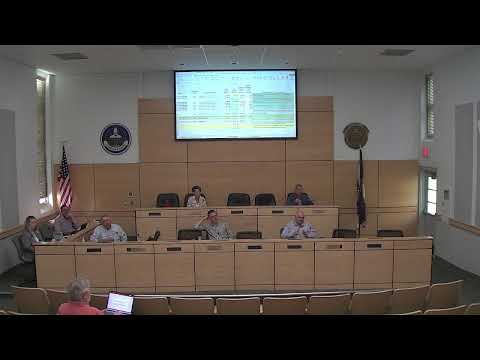
Madison County Board of Supervisors members spent the bulk of Budget Work Session No. 7 revising the county's FY27 numbers and weighing options to close a persistent budget gap.
Finance Director Jennifer told the board she had updated the budget model to reflect the Treasurer's higher interest projections, a modest sales‑tax downward revision, scheduled health‑insurance increases passed through to departments, and shifted school capital payments to reduce the one‑year hit. "I have updated the Treasurer's budget with the $26,000 increase in fees, plus added an additional $110,000 in revenue," Jennifer said, summarizing the inputs.
Why it matters: staff presented a package of changes that reduces the immediate shortfall but keeps the county relying on an opening balance appropriation. Jennifer said the model currently shows an opening balance appropriation of about $1.66 million; she noted that, if contingency funds were not used, the effective appropriation would be lower. The board discussed two near‑term revenue actions that were entered into the model: raising the meals tax to 5% and raising the lodging tax to 6% (each move shown in the model as adding roughly $140,000 and $50,000 respectively for the county), and a modest increase in real‑estate and personal‑property cents included in the staff scenario.
Board members emphasized tradeoffs. Supervisors repeatedly returned to personnel costs — insurance and COLA — and to the county's long‑term structural position. One supervisor noted the county's unassigned fund balance would fall over a multi‑year projection if current spending trends continue and said the board must consider revenue growth or service cuts. The chair cautioned that a multi‑year CIP and reassessments of major capital timing will be necessary to avoid recurring shortfalls.
What changed: among the adjustments Jennifer described were splitting a $550,000 school capital request across FY27 and FY28 (reducing FY27 exposure to $275,000), recording an early‑arriving grant (about $104,989) as FY26 revenue instead of FY27, and adopting the Treasurer's higher interest assumptions after the county secured higher deposit rates.
Next steps: staff will finalize advertisement language and the budget calendar; the board is scheduled to hold the advertised public hearing and then adopt the FY27 budget in its April meetings per the calendar staff presented. The board may also act on the school A&E funding as a supplemental appropriation if the joint CIP recommends it. The meeting closed with supervisors asking for continued scenario updates and tighter tracking of health‑insurance and COLA impacts.
Ending: Jennifer said the changes put the model in better shape but that longer‑term solutions remain necessary, including possible adjustments to the county's tax base and continued scrutiny of capital timing.