Get Full Government Meeting Transcripts, Videos, & Alerts Forever!
Get email alerts on the Campus Espionage topic
No spam. Unsubscribe anytime.
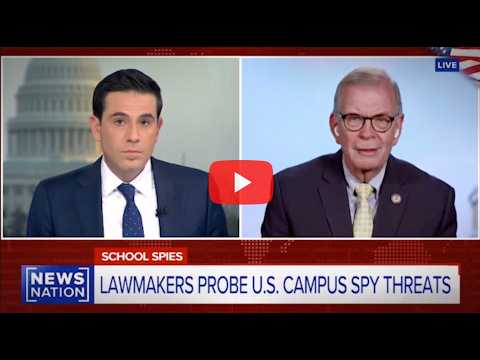
Rep. Tim Wahberg says China-linked espionage is a concern on U.S. campuses after testimony from Stanford reviewer
Summary
Rep. Tim Wahberg, chairing a House Education and the Workforce Committee hearing, described testimony that a Stanford Review editor was followed and intimidated after investigating alleged Chinese research influence; he said a recently passed deterrent act requires disclosure of some foreign funding.
Lawmakers heard testimony about alleged espionage and harassment tied to foreign research relationships at U.S. universities during a hearing led by Representative Tim Wahberg, Republican of Michigan and chairman of the House Committee on Education and the Workforce. Wahberg said the committee examined cases from multiple campuses and described one student at Stanford who reported being followed and intimidated while investigating suspected Chinese involvement in university research.
"The issue is the espionage that's going on, still going on on college campuses," Wahberg said, summarizing the committee’s concerns. He told the program the committee had passed a deterrent act earlier this year that places new reporting requirements on monetary awards from specified countries and is intended to make such funding transparent. He named China, North Korea and Russia among countries covered by the measure.
Wahberg recounted that the Stanford Review editor who investigated research ties said she received pushback and intimidation and that, according to the testimony Wahberg summarized, the FBI had assisted but Stanford University had not. Representatives from the University of Michigan and University of Florida also described actions their institutions had taken after identifying impacts tied to certain researchers, Wahberg said.
The hearing sought to identify vulnerabilities and prompt further oversight; no formal enforcement action or specific legislative penalties were recorded in the interview excerpt. The program did not include responses from the universities named or from other members of Congress in this segment.