Get Full Government Meeting Transcripts, Videos, & Alerts Forever!
Get email alerts on the Planning Orientation topic
No spam. Unsubscribe anytime.
Needles planning commissioners receive orientation on roles, Brown Act and ethics obligations
Summary
City Planner Romero gave a workshop for the Needles City Planning Commission on Feb. 4 outlining the commission’s advisory role, quasi-judicial duties, Brown Act constraints and required trainings; staff committed to providing written materials and scheduling ethics/Brown Act training for new commissioners.
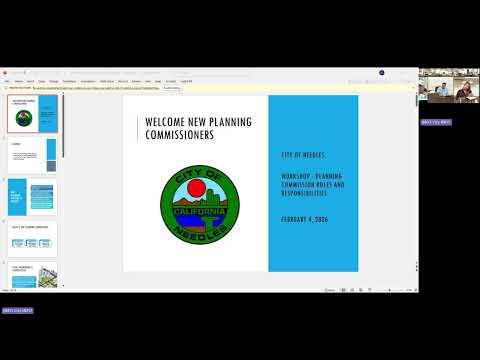
At a Feb. 4 workshop, City Planner Romero briefed the Needles City Planning Commission on the commission’s role, the Brown Act and required ethical disclosures, aiming to orient new and returning commissioners.
Romero told commissioners the panel serves as an advisory board to the City Council and reviews land-use proposals such as use permits, variances and subdivisions. “Planning shapes how Needles grows and looks, ensuring that new development fits our community’s character,” Romero said, framing the commission’s responsibility to align projects with the city’s general plan and zoning code.
Why it matters: commissioners routinely make quasi‑judicial decisions that affect property rights, Romero said, so members must apply city standards consistently and preserve due process for applicants and the public. He reviewed the Brown Act’s limits on serial communications among members, explained the Political Reform Act filing requirements and told commissioners that annual Form 700 filings are due by April 1 for many members.
Commissioners asked practical questions about informal contacts with colleagues and with members of the public; Romero and staff explained that discussing issues with up to three commissioners in a seven‑member body typically does not violate the Brown Act, but broader serial discussions can. Romero said staff will schedule the required ethics, harassment and Brown Act trainings and provide links and printed guidance where helpful.
Romero also advised commissioners to base votes on facts and evidence in the meeting record rather than personal impressions, to disclose any potential conflicts before participating, and to consult staff with procedural questions ahead of hearings. The commission administered an oath of office to newly seated commissioner Alan Cox during the meeting, and staff said they will distribute the planning handbook, city code links and other reference materials to commissioners before the next meeting.
Next steps: staff committed to providing the training schedule, the zoning-code links and a one‑page checklist for packet review before hearings. No formal policy actions were taken at the workshop.