Get Full Government Meeting Transcripts, Videos, & Alerts Forever!
Get email alerts on the Tax Policy topic
No spam. Unsubscribe anytime.
Wilson County court adopts tax‑abatement policy after residents press for groundwater protections
Summary
After hours of public comment urging groundwater studies and stronger development agreements, the Wilson County commissioners' court voted to adopt a county tax‑abatement/development policy intended to increase transparency and require development agreements when companies seek tax incentives.
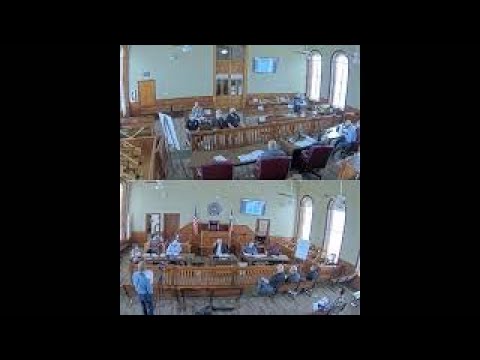
At a special session of the Wilson County commissioners' court, officials adopted a county tax‑abatement and development policy after extended public comment about water use by large industrial projects such as data centers and power plants.
Residents warned the court that large projects can demand substantial water and urged the county to require independent groundwater modeling, wildlife and habitat studies, air‑quality analyses and emergency‑response planning before granting incentives. A public commenter said the community was not calling to block development but to protect long‑term water resources and asked the court to insist on clear development agreements; "If we don't hear from you, you'll probably be hearing from us," the commenter said.
The policy under discussion requires that certain applications include a development agreement and signals the county's intention to make application review a court‑level process so the full commissioners' court sees proposals early. Commissioners and the judge repeatedly noted that counties in Texas have limited authority under state law and that many regulatory levers—particularly water permitting—are controlled at the state level or by underground water districts. Commissioner King and other commissioners urged a combination of local policy, public engagement and outreach to state agencies and legislators to pursue stronger protections.
Commissioners moved to "adopt the rules county tax policy as presented in the package." The motion was seconded; the transcript records the motion being entered and the court proceeded to close the special meeting. The transcript does not include a full roll‑call vote count in the excerpt.
Why it matters: County tax abatements and development agreements are one of the few local levers available to shape large projects in Wilson County. Residents and some commissioners said the policy should be paired with clear public notice, environmental and infrastructure studies, and enforceable development agreements if the county is to protect groundwater and community services.
What happens next: Commissioners discussed creating a working group of officials, residents and local experts to refine priorities and to pursue statutory or regulatory changes at the state level if needed. The court separately set related public hearings and directed staff to post required materials and resolutions for forthcoming audit and policy items.
Speakers quoted or referenced: a public commenter (identified in the transcript as a resident making extended remarks), Judge Henry Elbert Jr., Commissioner King and Commissioner Martin.
Provenance: The discussion and the motion to adopt the county tax policy appear in the transcript beginning at SEG 0844 with extended public comment and run through SEG 1771, where the motion to adopt was recorded.