Get Full Government Meeting Transcripts, Videos, & Alerts Forever!
Get email alerts on the Student Assessment topic
No spam. Unsubscribe anytime.
Millersburg Area SD reports mixed test results; administration cites strengths in literature and biology, weaknesses in algebra and some middle-grade math
Summary
District administrator presented PSSA and Keystone results showing Millersburg at 54% ELA proficiency (grades 3–8), 46.8% math proficiency (3–8), literature ~81%, biology keystone 58.5%, and algebra keystone 30.2%; administrators highlighted cohort timing for keystone gains and planned targeted interventions such as after-school algebra support.
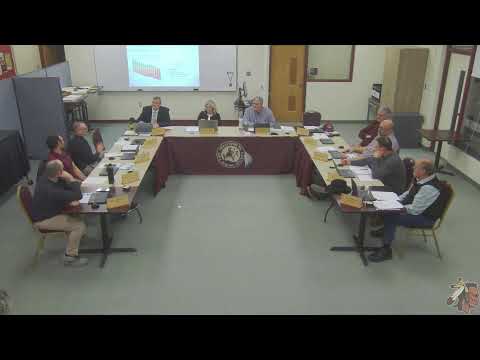
District administrator Mr. Lighter presented a detailed review of student achievement data and comparative spending, telling the board that Millersburg’s 2025 PSSA and Keystone results show both strengths and clear areas for focus.
"In 2025, our data point is here, which is 54," Mr. Lighter said, explaining that 54% of Millersburg students in grades 3–8 scored proficient or advanced on the ELA PSSA. He reported 46.8% proficiency or advanced in math for the same grades and highlighted that Millersburg’s literature results were especially strong (about 81%) while algebra keystone performance remained lower (30.2% proficient/advanced).
Mr. Lighter emphasized that keystone results are reported by cohort (senior class) and that changes to the algebra program will not show in keystone cohorts for several years. He also noted the district’s sixth-grade math group posted notably high scores in county and IU comparisons and that biology had been a relative strength (58.5% proficient/advanced in the keystone).
The presentation included per-student spending comparisons: a cited figure of $19,963 per pupil for Millersburg against an average of $19,572 for peer districts in the displayed comparison group. Mr. Lighter argued the district spends near peers while achieving comparatively stronger average proficiency across several tested subjects.
Board members asked for plain-language explanations of assessment bands, discussed Act 158 graduation pathways and composite scoring, and pressed administrators on remediation and intervention plans for weaker cohorts. Administrators said targeted steps are underway, including after-school algebra help before the keystone and traditional keystone remediation offerings; they also acknowledged scheduling constraints that limited some offerings this year but said the supports will be offered when feasible.
The presentation closed with a discussion of long-term trends showing improvement over a nine-testing-event span since around 2016, and a reminder that some weak areas (notably eighth-grade math and algebra) will require sustained focus and multi-year efforts to shift cohort-based results.