Get Full Government Meeting Transcripts, Videos, & Alerts Forever!
Get email alerts on the Local Services Library topic
No spam. Unsubscribe anytime.
Residents urge officials to keep Weed City library as surplus listing alarms locals
Summary
At the town hall residents pressed the assembly member about a Weed City library building placed on 'surplus' status; officials clarified no sale offer has been accepted and the assembly member said she will follow up and explore options including a 501(c)(3) to help sustain the library.
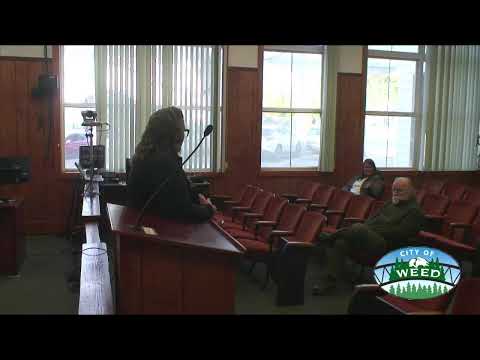
Residents at the Weed City town hall asked the assembly member to intervene after the local library building was put on the city's "surplus" list, which allows the city to entertain offers for sale. Audience members described the library as the third-busiest in the county and urged the legislator to encourage council to keep the building accessible.
A resident asked whether the assembly member could talk to the council and not sell the library building. Officials present clarified that listing an asset as surplus does not mean a sale has been approved; the council has not accepted any offer. The member said she would follow up directly with the council and with the library staff to explore options.
The member described steps she is taking behind the scenes: coordinating with the district attorney's office and the assembly's legal advisors on whether the library could be operated by a 501(c)(3) or special district, which could take over payroll and fundraising. "If it's under a 501(c)(3) they can ... take over the payroll of the library and start the donation cycle," she said, offering to connect volunteers with nonprofit and grant-writing resources.
Why it matters: locals said the library provides internet access, services for low-income patrons and a drive-through pickup that suits winter weather. Residents also noted downtown vacancy and litigation costs tied to receivership and blight; one official summarized the legal bills in a receivership action at about $110,000 so far and said the receivership timeline can stretch to roughly five years.
Next steps: the assembly member offered to speak with council members, help with forming a nonprofit board and connect the library with state grant and budget request processes; she encouraged residents to follow up through the district office contact information on the office website.