Get Full Government Meeting Transcripts, Videos, & Alerts Forever!
Get email alerts on the Wildfire And Insurance topic
No spam. Unsubscribe anytime.
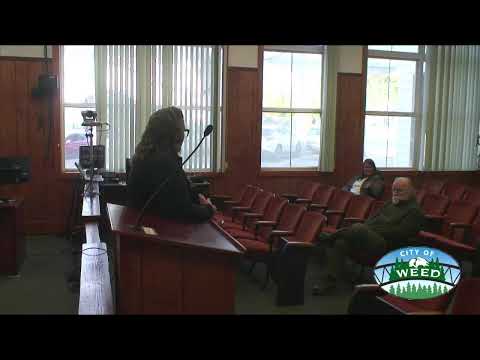
Assembly member outlines wildfire, insurance and rural priorities at Weed City town hall
Summary
At a Weed City town hall the assembly member highlighted recent wildfire-related budget wins, urged home-hardening to lower insurance costs and pledged legislation on wolves, illegal grows and rural carve-outs; she urged residents to send home-hardening documentation to her office for Fair Plan review.
An assembly member visiting Weed City used a town-hall forum to press for more fire mitigation, outline recent district budget wins and describe steps her office is taking to help homeowners facing steep insurance costs.
The official said the district secured targeted funds this year, citing $10 million for the Karuk Fire Resiliency Center in Happy Camp, roughly $70 million for Sierra Nevada/Tahoe Conservancy fire mitigation projects and $2 million described as "Wolves for direct loss" aimed at addressing wolf-related claims. She also discussed tax-exemption work that reduced tax burdens for some fire victims from 2021–2024 and noted a governor action expanding exemptions for later fires.
Why it matters: rural communities in the assembly district face long travel distances, winter conditions and sparse markets that make recovery—and insurance—more difficult. Those constraints, the member said, require different legislative fixes and carve-outs than urban areas receive.
On insurance, the member urged homeowners who have completed "home hardening" (roofing changes, defensible space and similar measures) to submit documentation to her district office so the Fair Plan can review estimates on a case-by-case basis. "If you've done home hardening ... you can send those to our office and they are looking at them individually for us," she said, describing several cases where individual review produced lower premiums.
She told the audience the statewide Fair Plan often functions as an insurer of last resort and does not always account for local fire scars or hardening work when producing estimates. The assembly member said state staff have offered modest credits tied to specific hardening actions—for example, programs that could yield about $300 a year in savings for qualifying properties—and that some industry forecasts expect premiums to rise by roughly 15 percent next year. She also cited constituent reports of annual premiums in the range of $15,000–$20,000.
On public safety and environmental harms, the member described persistent problems with illegal indoor grows in remote parts of the district, saying they have caused "poisoned" land, hazardous waste and firefighting challenges. She said local sheriffs conduct regular enforcement actions but that county capacity is limited and state or federal help is often required. The member said she is working with chairs of public safety, natural resources and environmental safety committees to craft legislative options, including fines and tougher environmental penalties, but emphasized many enforcement and cleanup solutions require more funding and interagency coordination.
The meeting included skeptical or unverified audience claims that organized foreign-funded groups operate some large illegal grow operations; the member characterized those as local reports and said they are part of what law enforcement and environmental committees are investigating, but those assertions were not substantiated during the event.
Next steps: the member said she will continue drafting language on wolf transparency and public-safety authorities for sheriffs, press for changes to how the Fair Plan accounts for home hardening, and pursue rural-caucus work to keep touring and educating colleagues about on-the-ground wildfire and recovery needs.