Get Full Government Meeting Transcripts, Videos, & Alerts Forever!
Get email alerts on the Muskego Mayoral Forum topic
No spam. Unsubscribe anytime.
Muskego mayoral forum highlights divisions over public safety, roads and housing
Summary
At a Muskego City Hall forum hosted by the Muskego Women's Club, incumbent Mayor Rick Palsolski and former Mayor Kathy Chevarati sparred over public safety staffing and fire/EMS options, a plan to accelerate road repair through borrowing, and the role of higher-density development in the city's 2035 comprehensive plan.
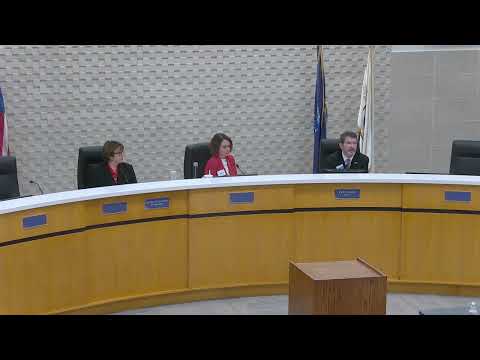
Kristen Lisman of the Muskego Women's Club opened the forum at Muskego City Hall and outlined strict timing and decorum rules for the evening's voter-education event.
Former Mayor Kathy Chevarati and incumbent Mayor Rick Palsolski used three-minute opening statements to stake contrasting claims about priorities and process. Chevarati framed her candidacy around transparency and accountability, saying she had voluntarily contributed to the state retirement system while mayor and emphasizing committee-based deliberation. Palsolski highlighted what he described as four years of fiscal gains under his administration: reductions in the city's equalized tax rate, a higher bond rating, roughly $17 million of debt retired, and nearly $2 million returned to fund balance.
The clearest divisions appeared on public safety, roads and housing. On public safety, Palsolski said Muskego relies heavily on volunteer fire and EMS and that volunteer recruitment has declined; he said the city has hired a consultant to evaluate options and might consider combining services with neighboring jurisdictions or supplementing volunteers with paid staff to ensure reliable 911 response. "We're right now engaging through a consultant to evaluate our services," he said, adding that the goal is simply "when you call 911, people show up." Chevarati called the consultant review "premature" and said decisions about fire and rescue belong in public committee sessions where residents can engage.
Roads were another frequent focus. Palsolski described a multi-year borrowing plan intended to accelerate repairs, arguing borrowing costs compare favorably to the rising material costs of piecemeal repairs. Chevarati countered that annual operating allocations for roads have been cut (she said the road budget fell from about $750,000 to $375,000), expressed concern about proposed repeated $5 million borrowings and urged more conservative, committee-led budgeting; she also cited landfill funds as one revenue source the city has historically used for roads and parks.
On housing and the city's 2035 comprehensive plan, both candidates said Muskego should protect its residential character. Chevarati cautioned against spreading higher-density housing into farming or suburban neighborhoods and recommended adding ordinance-level safeguards (for example, distance buffers for heavy industry from housing) and more recent public outreach before council votes. Palsolski described the comp plan as a guiding document and said that, while he generally opposes widespread higher-density development in Muskego, zoning and municipal code language (not the comp plan alone) should be the tool for protecting neighborhoods.
Audience-submitted questions underscored local priorities: resurfacing the Mosquo Recreational Trail (a constituent urged pursuing federal Transportation Alternatives grants with an Oct. 2027 window), senior services and reuse of the old police building, and transparency in committee meetings and finance oversight. Both candidates committed to discussing trail improvements and to including trail paving in capital goal-setting and grant planning if feasible.
No formal motions or votes were taken at the forum. The exchange was primarily a series of timed answers and rebuttals; both candidates repeatedly emphasized public safety and fiscal planning as top priorities. Chevarati closed by reiterating an emphasis on transparent committee processes; Palsolski closed by asking voters to re-elect him to continue the administration's fiscal and public-safety programs.
What happens next: the candidates and public referred to the city's upcoming election on April 7 (date cited during the forum) and to an upcoming common council review of the comprehensive plan. Journalists and voters should expect the council discussion of the comp plan and any subsequent committee hearings to be the next formal venues for policy decisions raised at this forum.