Get Full Government Meeting Transcripts, Videos, & Alerts Forever!
Get email alerts on the Internal Controls topic
No spam. Unsubscribe anytime.
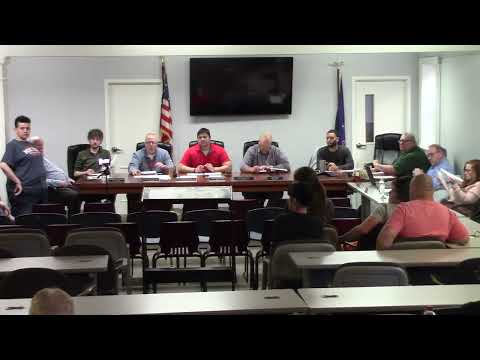
Sunbury City council reviews rink audit; auditor found control gaps but no conclusive fraud
Summary
An agreed-upon procedures review of Sunbury City’s ice-skating rink found weak internal controls — inconsistent deposits, limited segregation of duties and reactive surveillance — but the auditor said his limited review did not present conclusive evidence of intentional fraud. Council debated whether to commission a full forensic audit or rely on internal fixes and a planned POS rollout.
Sunbury City Council reviewed an internal-control report on the city’s ice-skating rink after a reported theft prompted an investigation and subsequent audit request. Chief Slack summarized the investigation and said two people were arrested in the theft probe, and that investigators found multiple bags of cash in different locations at the rink.
Tony Gard of Cic Associates, who conducted an agreed-upon procedures review limited to rink operations, told the council the engagement was not a full, citywide audit but focused on cash-handling practices. Gard said the review found limited segregation of duties, inconsistent deposit preparation, irregular physical inventory counts and that surveillance review was mostly reactive rather than scheduled. He recommended independent verification of deposits, daily or next-business-day cash deposits, formalized written policies for discounts and rentals, routine surprise inventory counts, quarterly operational reports to management and stronger closeout procedures.
“Again, we didn’t see any indications of intentional fraud in the limited procedures we performed, but there were several internal-control weaknesses that create risk,” Gard said, emphasizing the review’s scope was limited and that a forensic audit would be broader and more costly than the current work.
Council members acknowledged the findings but questioned whether a full forensic audit was warranted. One council member said Gard’s report did not demonstrate a clear, deliberate theft scheme but called for action to prevent future problems. Another member pointed to staffing limits at the rink — two or three employees on duty at times — and said that small staffing levels make segregation-of-duties recommendations hard to implement without additional hires. Jeff, speaking for the council, said, “First of all, Tony, everything you pointed out is accurate,” signaling broad acceptance of the review’s control observations.
Members noted a planned point-of-sale (POS) system will provide daily transaction records and should address some of the reconciliation problems Gard described. Gard estimated a full forensic audit could be performed under either an agreed fee or hourly contract and suggested such work could cost substantially more than a limited review — he offered a rough range of about $30,000–$35,000 as an illustrative estimate, depending on scope.
Some council members suggested asking the state attorney general’s office to review money movements if there were concerns about criminal activity; others urged first implementing Gard’s operational recommendations and the POS rollout to see whether those steps resolve the gaps. The council agreed to discuss the matter further in a work session to decide whether to pursue a forensic audit, to task staff with implementing agreed internal controls and to follow up as auditors and police provide more information.
The work-session segment ended with the council accepting the draft report and directing follow-up steps for management and finance.