Get Full Government Meeting Transcripts, Videos, & Alerts Forever!
Get email alerts on the Social Studies Curriculum topic
No spam. Unsubscribe anytime.
Clayton board adopts rewritten K–12 social studies goals, emphasizing inquiry, civics and ‘hard history’
Summary
The Clayton Board of Education approved long‑range social studies goals and a revised K–12 curriculum that shifts toward inquiry, media literacy and earlier civics instruction while aligning more closely with Missouri standards. The move follows a two‑year self‑study and months of teacher and student input.
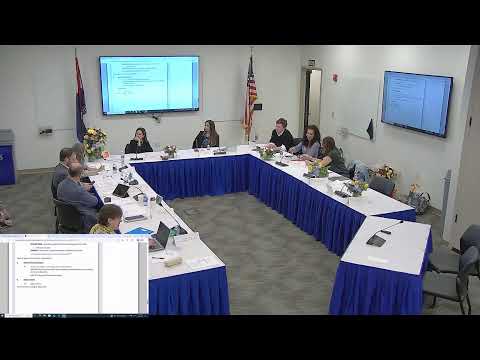
The Clayton Board of Education on March 24 approved a revised K–12 social studies curriculum and four years of long‑range goals designed to deepen content, increase media literacy and introduce civic identity earlier in the sequence.
Dr. Paul Helchshire, the district's social studies coordinator, told the board the two‑year self‑study aimed to align district materials with Missouri learning standards, reduce overlap between grades and give teachers more substantive material. The plan emphasizes five content areas—culture, history, geography, civics and economics—and adds inquiry, source evaluation and a common claim‑evidence‑reasoning (CER) framework across grades.
"We wanted to align more closely with Missouri standards and also add depth through the Learning for Justice approach," Helchshire said, describing changes as a response to teacher feedback and evolving classroom needs. He said the committee incorporated resources and models from Massachusetts' civics initiative and Stanford research on source evaluation.
Board discussion focused on how the changes will affect students in the middle and high school sequence. Several trustees pressed staff on how the district will "catch holes" left by rearranging U.S. and world history content, and whether the 8–10 sequence will need further adjustment once students matriculate through the new K–7 sequence.
Helchshire said the district will write targeted assessments to identify knowledge gaps as cohorts progress through the revised sequence and will reconsider the 8–10 configuration after data is available. "We may need to compact or reallocate some ninth‑grade units to maintain coverage of U.S. history," he said.
The board also heard about classroom approaches tied to the revision. Staff highlighted short, frequent micro‑DBQs (document‑based questions) to develop source skills, the use of lateral reading strategies to evaluate web sources and projects in seventh grade that culminate in community engagement.
After questions and debate, a trustee moved to approve the revised social studies long‑range goals, the district written curriculum and attached financials. The motion was seconded and the board voted to approve the changes.
What happens next: Staff will write and pilot the new assessments, continue professional learning with teachers and monitor student performance as the revised sequence is implemented over the coming years. The board’s approval authorizes instructional rollout and the financial resources outlined in the curriculum packet.